Every Drawing has a Story…
NEW Drawings drop on Friday
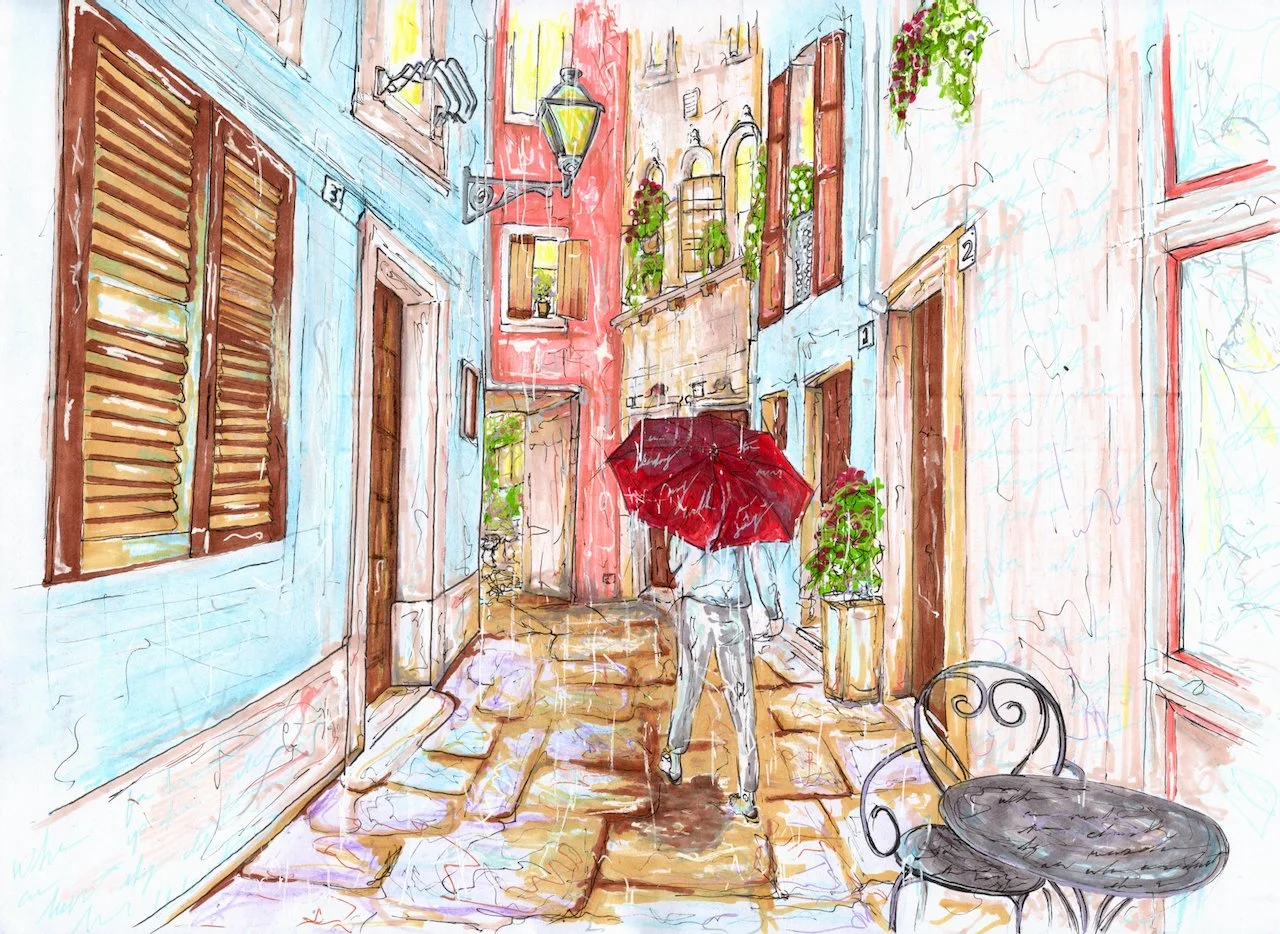
Rain Down
A washing, a cleansing, a refreshing of parched and thirsty souls. A miraculous awakening of dormant, almost-forgotten seeds of hope. These are thoughts that dare to dance within as I sketch this week’s drawing.
Rain itself is a testament to a perfectly designed water cycle. How many times has He loaded the clouds, only to wring them out over the thirsty?
“He loads the thick cloud with moisture;
the clouds scatter his lightning.
They turn around and around by his guidance,
to accomplish all that he commands them
on the face of the habitable world.”
— Job 37:11–12 (ESV)
And imagine: His rain touches even the most remote and isolated places. The bloom that follows may never be seen by human eyes.
“Who has cleft a channel for the torrents of rain
and a way for the thunderbolt,
to bring rain on a land where no man is,
on the desert in which there is no man,
to satisfy the waste and desolate land,
and to make the ground sprout with grass?”
— Job 38:25–27 (ESV)
When it rains, remember: the water falling around you has been part of this remarkable cycle for ages. Look up and realize you are witnessing a miracle.
Something Old, Something New, Something Felt, and Something Just Out of View
NEW Drawings drop on Friday
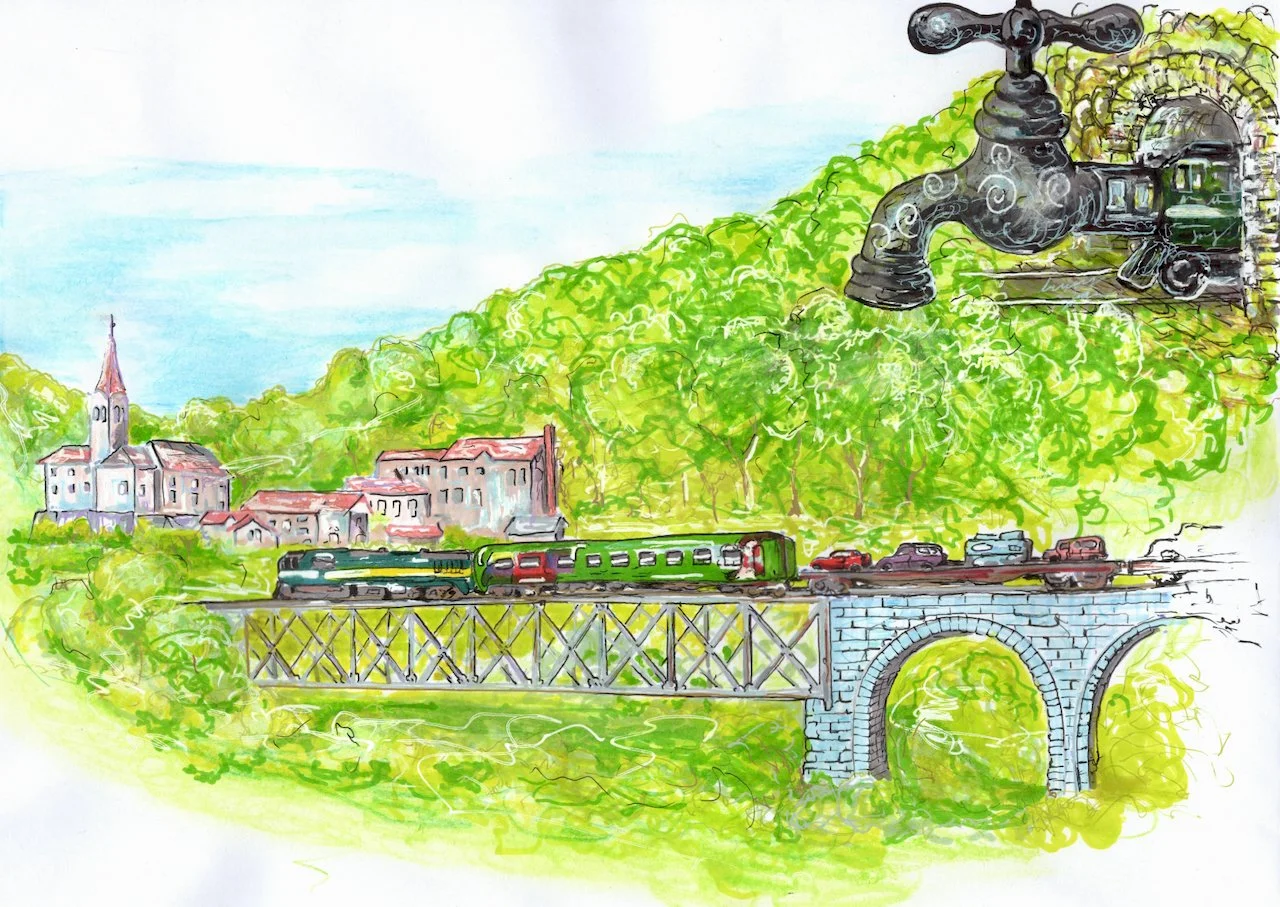
Pitch black, sitting in a parked car, yet traveling at 40 km/h. Possible because I had parked our rented 2026 Peugeot on an open flatbed rail car of the Bohinjski car train. This ride under the Julian Alps felt a little Disney Space Mountain-esque, minus the fake constellations.
We were traveling through the 120-year-old, 6.3 km Bohinj Tunnel with a destination of the Soča Valley. Coming out the other end resulted in an eye-blinking flood of light, washed with a brilliance of color worthy of the opening scene of a Hollywood blockbuster.
Our journey continued through several shorter tunnels, each providing a similar sensory experience: flowing through darkness, then emerging, as if from a dark pipe, into a new, vividly colored scene.
I was reminded during this journey that walking in faith requires full surrender. I cannot control the train, the length of the tunnel, or the speed of travel. Although the steering wheel is still within reach, I surrendered its use the moment I punched my ticket.
“Now faith is the assurance of things hoped for, the conviction of things not seen.” — Hebrews 11:1
Faith sometimes means entering a pitch-black tunnel. We can’t see the destination, control the speed, or know exactly how long the darkness will last. The darkness doesn’t mean we’ve lost our way. It may simply mean we’re still in the tunnel. But the train is still moving, and I can trust the One who knows the destination.
I appreciate that He also provides moments of clear sight and glimpses of just how purposeful and intricately He has interwoven our lives.
Squeaky Sneaks
NEW Drawings drop on Friday
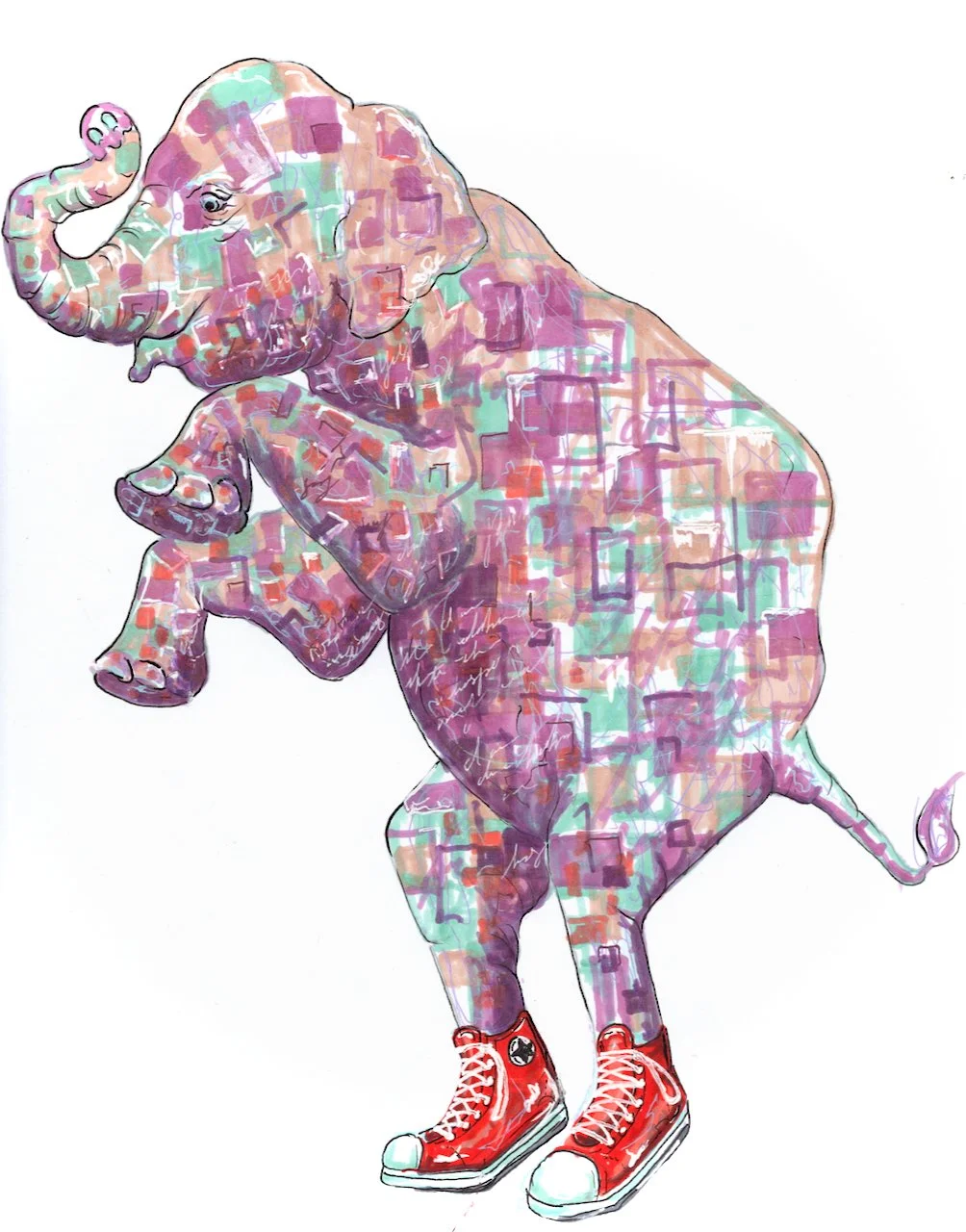
A new pair of kicks can make for an awkward entry. It comes down to the physics of the stick-slip friction phenomenon between the pristine rubber outsole and any smooth surface it comes into contact with.
Why the squeaks?
Movement results in multiple sudden release events that produce tiny vibrations in the rubber and shoe. If those vibrations fall within the audible range, and particularly if the shoe/floor combination amplifies that frequency, your entry becomes annoyingly audible.
My pens this week poked fun at the lighter side of an awkward entry, but all kidding aside, it made me ponder all of the internal squeaks falling just outside the audible range that keep us from confidently entering the room of life.
Yours are most certainly different from mine, but the vibrations are real, the squeaks are internally loud, and the anxiety they produce may be holding you back—or even keeping you from stepping out at all.
Last week, I tackled a few of my internal squeaks by reminding myself who was actually in control.
“I can do all things through him who strengthens me.”
— Philippians 4:13 (ESV)
Just like breaking in a new pair of shoes, the only way to get through life’s squeaks is one step at a time. I am grateful that God does not ask us to do it alone.
“Be strong and courageous. Do not fear or be in dread of them, for it is the LORD your God who goes with you. He will not leave you or forsake you.”
— Deuteronomy 31:6 (ESV)
A Heart Surrendered
NEW Drawings drop on Friday
527 MPH at 34,016 feet has a way of slowing time down. I have never been a good sitter, and my posterior is beginning to feel the minutes click by like hours. Today, I am thankful for my pens and a relatively smooth ride.
I do enjoy traveling, but it is a part of my life that has been on pause for the last four years. Not one to peel a bandage off slowly, the Murphys signed up for 29 hours of flights and many hours behind the wheel of a Peugeot 5008, all in the name of experiencing Slovenia.
The country did not disappoint, literally overflowing with mountain trails, fairy-tale lakes, lush river valleys, and the warm, inviting waters of the Adriatic Sea.
My prayer ahead of the trip was that God would use the time to strengthen our family, further heal our hearts, and, if possible, use us to encourage others. He answered that prayer in ways I could never have imagined.
Healing is a journey, and this trip has reminded me how often I attempt to bend God’s will to meet my own desires.
Jesus reminds us in Matthew 6:10 to pray:
“Your kingdom come, your will be done,
on earth as it is in heaven.”
A fully surrendered will feels insurmountable, yet I am convinced that to truly live, it is a mountain I must continue to climb.
Isaiah 41:13 reminds us that, like a child reaching out to a parent, God offers His steady hand and a promise to help. Perhaps surrender is not so much letting go as it is realizing whose hand is already holding ours.
“For I, the LORD your God, hold your right hand; it is I who say to you, ‘Fear not, I am the one who helps you.’”
— Isaiah 41:13 ESV
Returning home, my mind is full of new images yet to be sketched, meals shared with unlikely friends, big prayers prayed and tender prayers answered, and dozens of stickers shared as paths crossed.
But perhaps the greatest gift from Slovenia is this: a little more of my heart surrendered to the One who has been tending to it all along.
Elephant in the Zoom
NEW Drawings drop on Friday
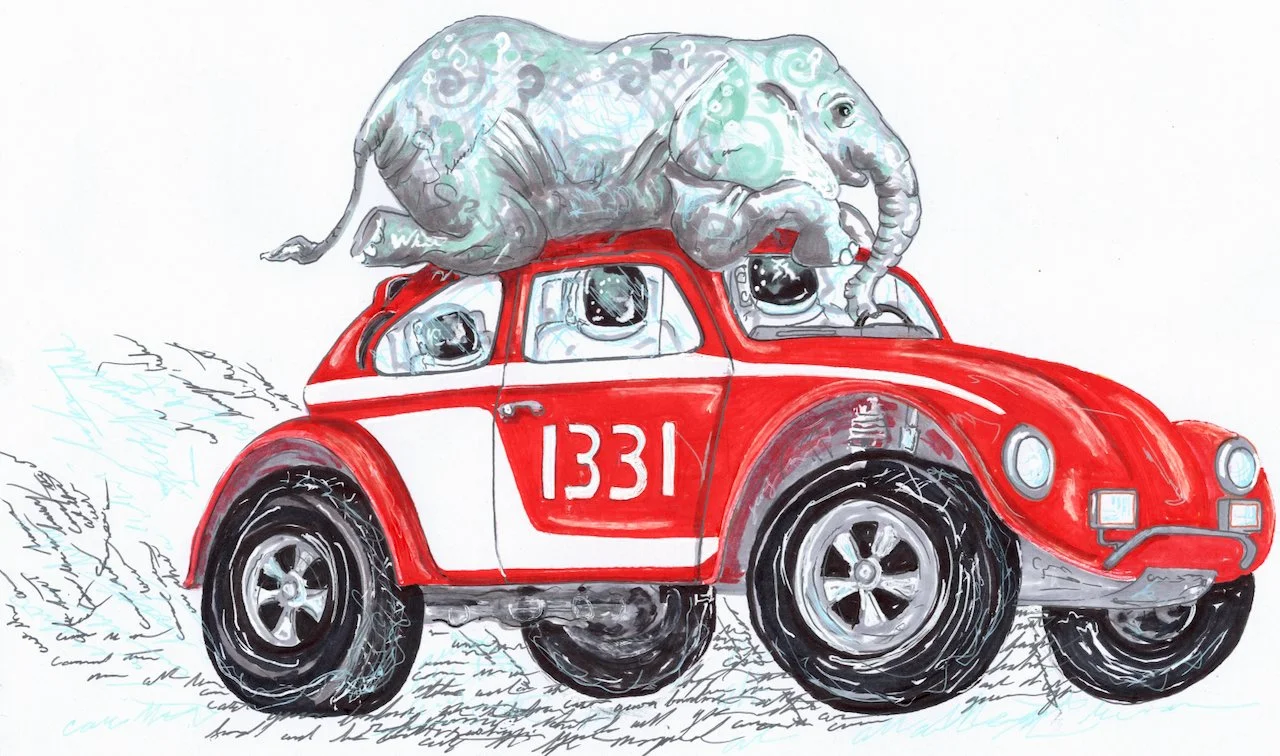
Wait, I thought the idiom was “The Elephant in the Room.”
You are absolutely correct, but my Sharpies had other plans, and I ended up with “The Elephant in the Zoom.”
The original idiom describes something obvious that everyone collectively ignores. Think in terms of “The Emperor’s New Clothes” or “Stone Soup.” Wait, did I just explain an idiom with folktales? Maybe…
Consider how often we walk out the door with our proverbial pachyderm weighing us down.
Oh, the burdens we carry—the secret vices, the insecurities that hold us back, the wounds that have more pull on us than we care to admit…
Good news: you don't have to keep living weighed down in the Zoom.
“Cast your burden on the LORD, and he will sustain you; he will never permit the righteous to be moved.”
— Psalm 55:22 ESV
Even better news: you don't have to do it alone.
“Come to me, all who labor and are heavy laden, and I will give you rest. Take my yoke upon you, and learn from me, for I am gentle and lowly in heart, and you will find rest for your souls. For my yoke is easy, and my burden is light.”
— Matthew 11:28–30 ESV
Jesus doesn't promise a life completely free of burdens. He promises a better way to shoulder them—yoked side by side.
Filling Someone Else’s Shoes
NEW Drawings drop on Friday
As a child, I would often step into my dad’s size 11s, feeling them dwarf my pint-sized tootsies. I would move about the house with a shuffle-hop sort of step—a very little man doing his best to fill an older man’s shoes.
My feet now fully grown, I have witnessed my own boys graduate from their days of clopping about like adolescent dinosaurs in my unattended footwear.
The concept rattling around in my brain this week: Can you truly fill the shoes of another? My conclusion: Time spent walking with my own father helped prepare me to be a father. Stepping into fatherhood required me to own the shoes I was putting on.
John says it another way: “whoever says he abides in him ought to walk in the same way in which he walked.” 1 John 2:6 (ESV)
Jesus sets the ultimate example of how to walk through life and in fatherhood. Filling His shoes is an unattainable task, but walking in the way He walks is a daily practice worth pursuing.
Remember for a moment your own once-tiny feet. Consider the oversized shoes they have tried to fill. Be still and consider the path God is calling you to walk, and rest assured, He is not asking you to go it alone.
A Mind Divided, a Taco Delayed
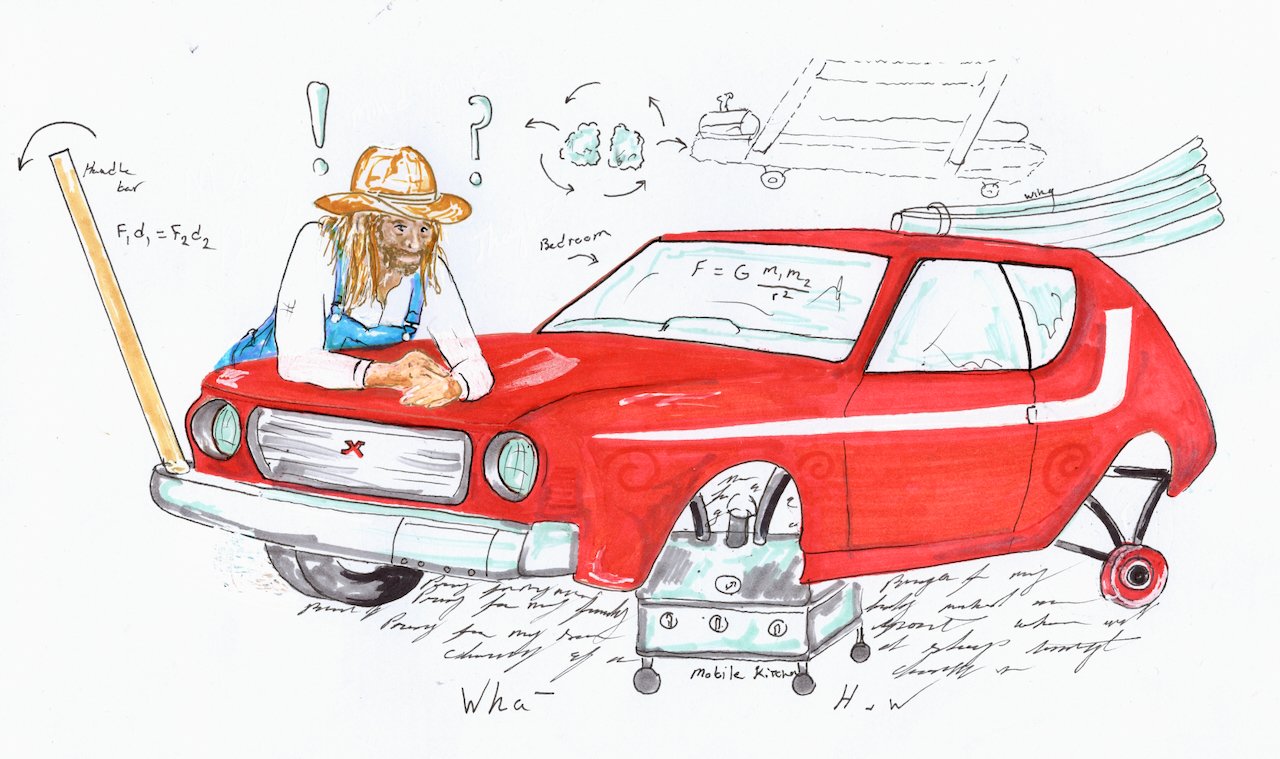
Walking down the sidewalk, casually chatting with my friend Jake, we had Papi Chulo’s Taco Shop in our crosshairs when I abruptly stopped to admire a very interesting contraption taking up a sizable section of the path. A homeless man was bending down, messing with one of the protruding boards. Intrigued, I asked him to tell me about his creation. It was part skateboard, part mattress, with hidden compartments, a mast, and removable wings.
Thirty minutes later, we had our new friend’s story, his name—we’ll call him Sam—and loads of interesting and fragmented facts. I do believe Sam is brilliant, yet somehow disconnected from reality, with intermittent short circuits that gave him an unpredictable vibe, a nervous energy, and made it difficult for him to stick to a single subject.
We ended our time together praying for an upcoming visit Sam would be having with his family.
Dinner with Jake was one of the highlights of my week, but to be honest, it was the fellowship, not the tacos, that stuck with me.
I have continued to pray for Sam this week, specifically for clarity of mind, body, and spirit, as well as for his upcoming visit with family. I feel as if God allowed me a glimpse of who Sam was created to be and reminded me not to take for granted my own freedom of mind.
I thought it was appropriate to leave this week’s drawing unfinished. It reminds me that God is not done working in Sam’s life. And, perhaps more importantly, it reminds me that we are all works in progress.
“And the peace of God, which surpasses all understanding, will guard your hearts and your minds in Christ Jesus.”
Philippians 4:7 ESV
The Wrong End of the Honey Bee
NEW Drawings drop on Friday
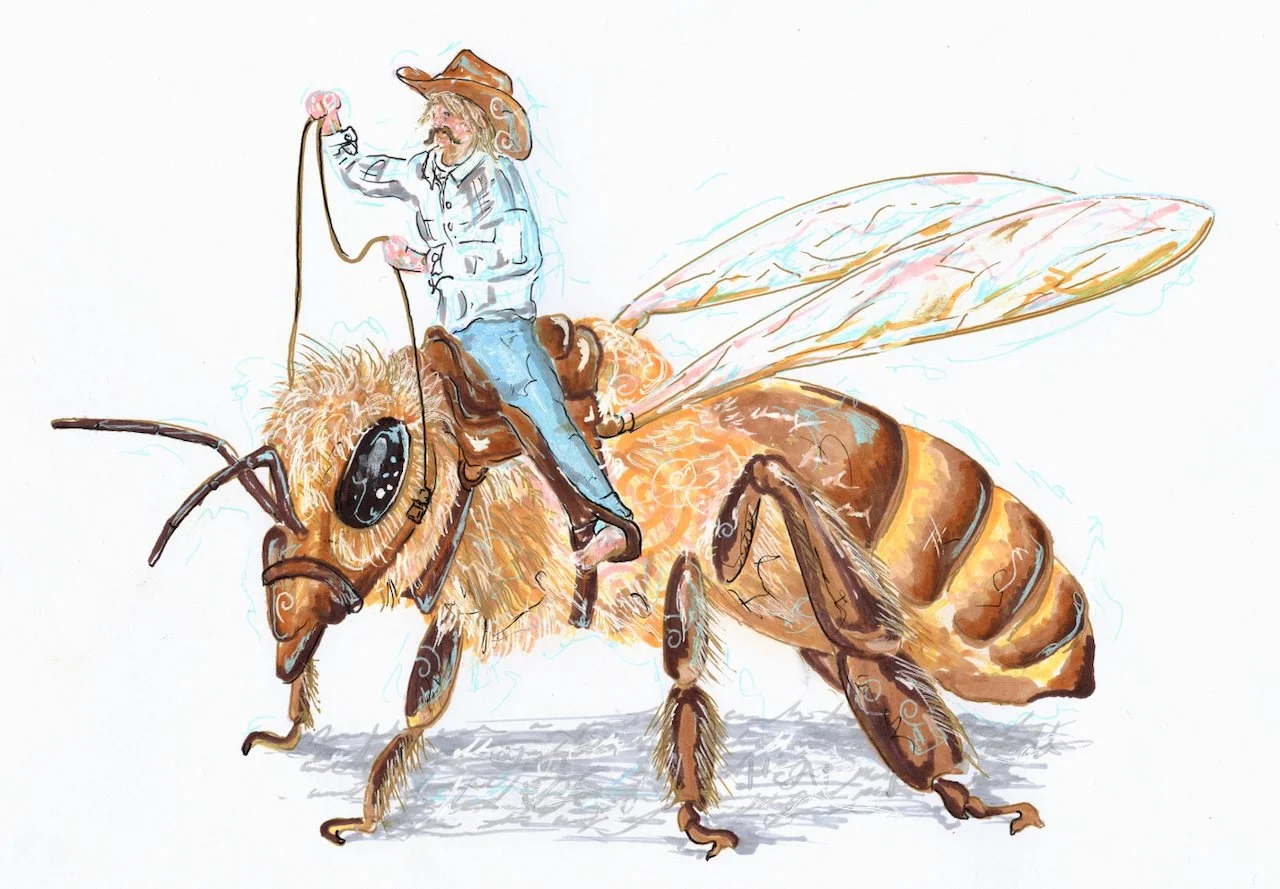
I was a barefoot, all-gas-no-brakes sort of kid with a knack for finding the stinging end of more than my fair share of pollinators. As an adult, I still tend toward a fast pace, continue to wander barefoot on the regular, and, come to think of it, I've been stung on the foot twice this summer. I guess not much has changed.
Well... almost.
I rarely wear fake mustaches anymore, and the bee I once saw as an enemy now fascinates me. Did you know a honey bee visits 50 to 100 flowers during a single foraging trip? Or that producing just one pound of honey requires a colony to visit approximately two million blossoms?
And then there's the remarkable energy stored in honey. In theory, just one ounce of honey contains enough energy to fuel a honey bee for a journey roughly equal to the circumference of the Earth—about 25,000 miles.
John the Baptist was a wild sort of character who spent the better part of his life in the wilderness, and I imagine he got stung a time or two while collecting wild honey. When he eventually stepped into ministry, it became clear that his years in the wilderness had not been wasted—they had been preparing him for the man God had called him to be.
That train of thought causes me to ponder the child I once was, life's various stings, lessons, and scars, and the man who now meets my gaze in the mirror. I ask myself a simple question:
What have you learned, and how are you using it to serve others?
Peter answered that question this way:
"As each has received a gift, use it to serve one another, as good stewards of God's varied grace."
1 Peter 4:10 (ESV)
A Car that Wore Pants
NEW Drawings drop on Friday
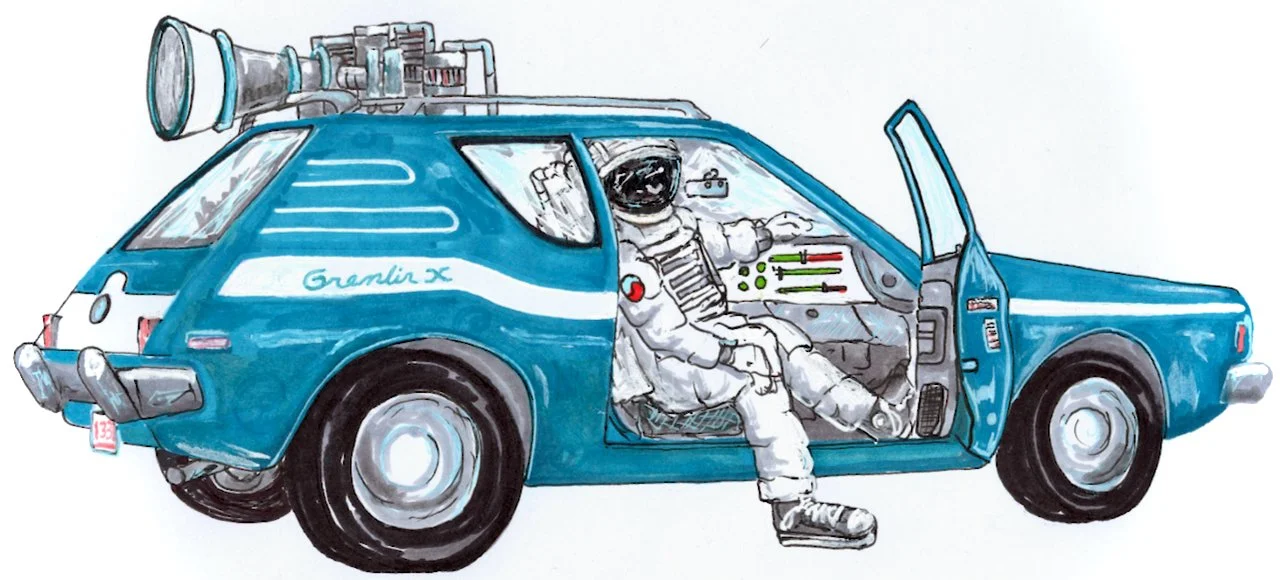
Sounds crazy, but in 1973 AMC partnered with Levi's to give the Gremlin X a denim-inspired interior featuring an authentic denim look, orange stitching, copper rivets, and Levi's signature red tag.
Today, brand partnerships are commonplace, but in 1973 this collaboration was radically innovative.
My inquisitive nature couldn't help but wonder what a 1973-inspired AMC Gremlin and SpaceX mashup would look like.
Sometimes the most unlikely pairings produce the most extraordinary results.
Consider another unlikely pairing found in John 6:8–13 (ESV): a young boy with five loaves and two fish. By themselves, they were little more than a picnic for two. But when placed in the hands of Jesus, they became a meal that fed thousands.
Today's drawing is simply a spark, inviting us to consider the partnership God may be placing before us.
What ordinary thing has God placed in your hands that, when surrendered to Him, could become something extraordinary?
8 Minutes, 20 Seconds
NEW Drawings drop on Friday
Step into the fullness of a July afternoon and you will experience two distinct sensations: a pupil-shrinking wash of light and the immediate warmth of the sun on your skin. The question—how did that sunlight reach you?
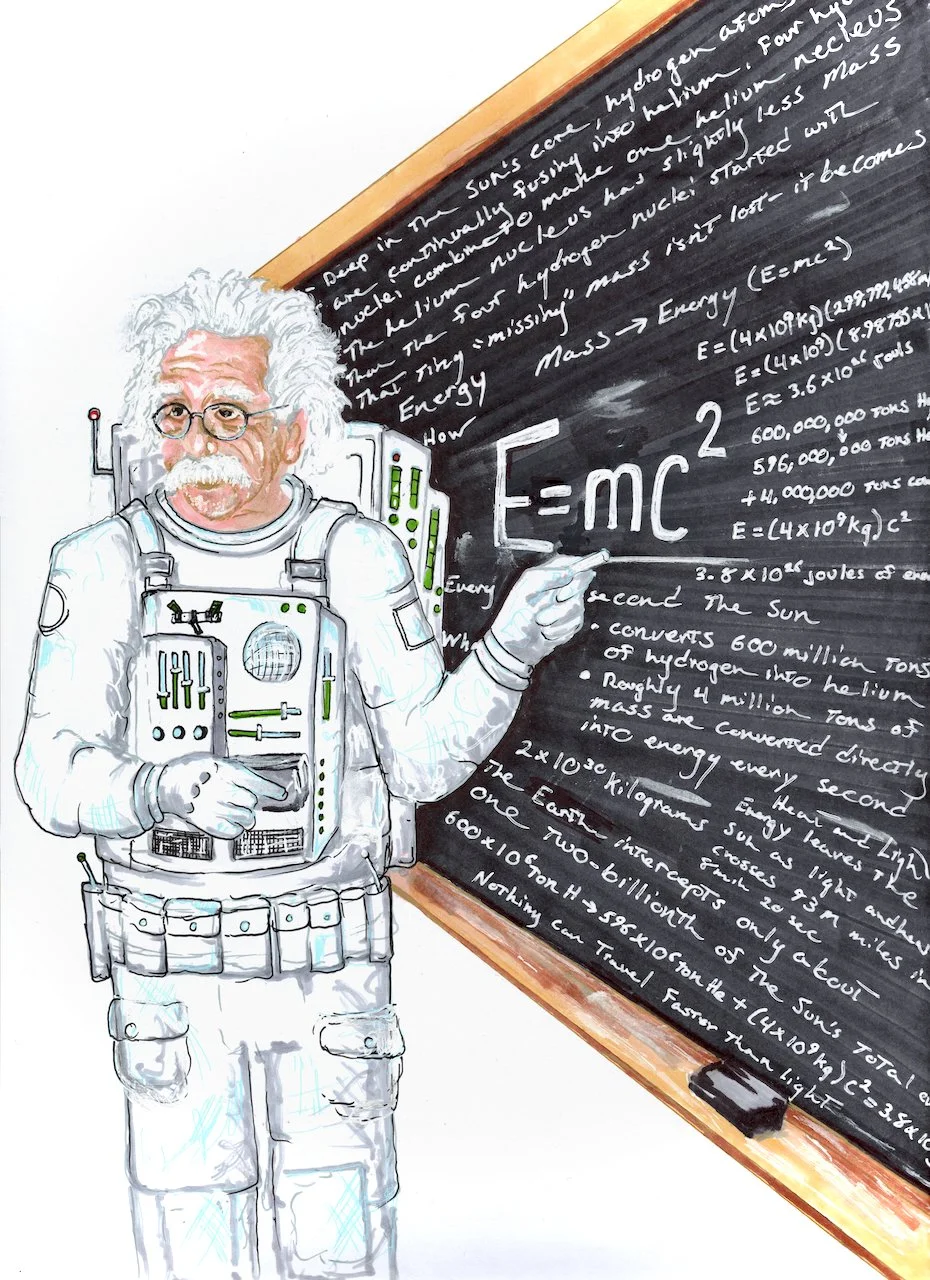
Perhaps questions like these stirred the curiosity that eventually led Einstein to his famous equation, E = mc².
The answer begins deep within the Sun’s core. Four hydrogen nuclei collide through a series of nuclear reactions, resulting in a single helium nucleus. The remarkable part: the helium nucleus weighs less than the four hydrogen nuclei that created it. Some of the mass is missing. That missing mass is exactly what Einstein's famous equation describes—it has been transformed into energy.
Every second, about 600 million tons of hydrogen fuse together, resulting in approximately 596 million tons of helium. The remaining 4 million tons of mass are transformed into energy, first released as high-energy gamma rays. Those photons spend thousands—perhaps even hundreds of thousands—of years bouncing from atom to atom before finally escaping the Sun's surface as visible light and other forms of electromagnetic radiation.
This incredible exchange reminds me of the First Law of Thermodynamics: within the universe, energy cannot be created or destroyed—it is transformed from one form to another. More than that, it stirs my soul, pointing me toward God's intentional design and steadfast love.
It is no accident that Earth's orbit lies within what astronomers call the "Goldilocks Zone"—the narrow region around a star where temperatures allow liquid water to exist. Were Earth any closer to the Sun, its oceans would eventually evaporate. Were it any farther away, our world would become a frozen, lifeless landscape.
Every ray of sunlight that reaches your face has undergone the same remarkable transformation and then traveled 93 million miles through space for 8 minutes and 20 seconds—a testimony to His wisdom, His precision, and His steadfast love.
Consider this: long before you were born, God was already preparing the light that would one day warm your skin and sustain your life.
"He causes his sun to rise on the evil and on the good, and sends rain on the just and on the unjust." (Matthew 5:45, ESV)
"The steadfast love of the LORD never ceases; his mercies never come to an end; they are new every morning; great is your faithfulness." Lamentations 3:22–23 (ESV):
First Impressions
NEW Drawings drop on Friday
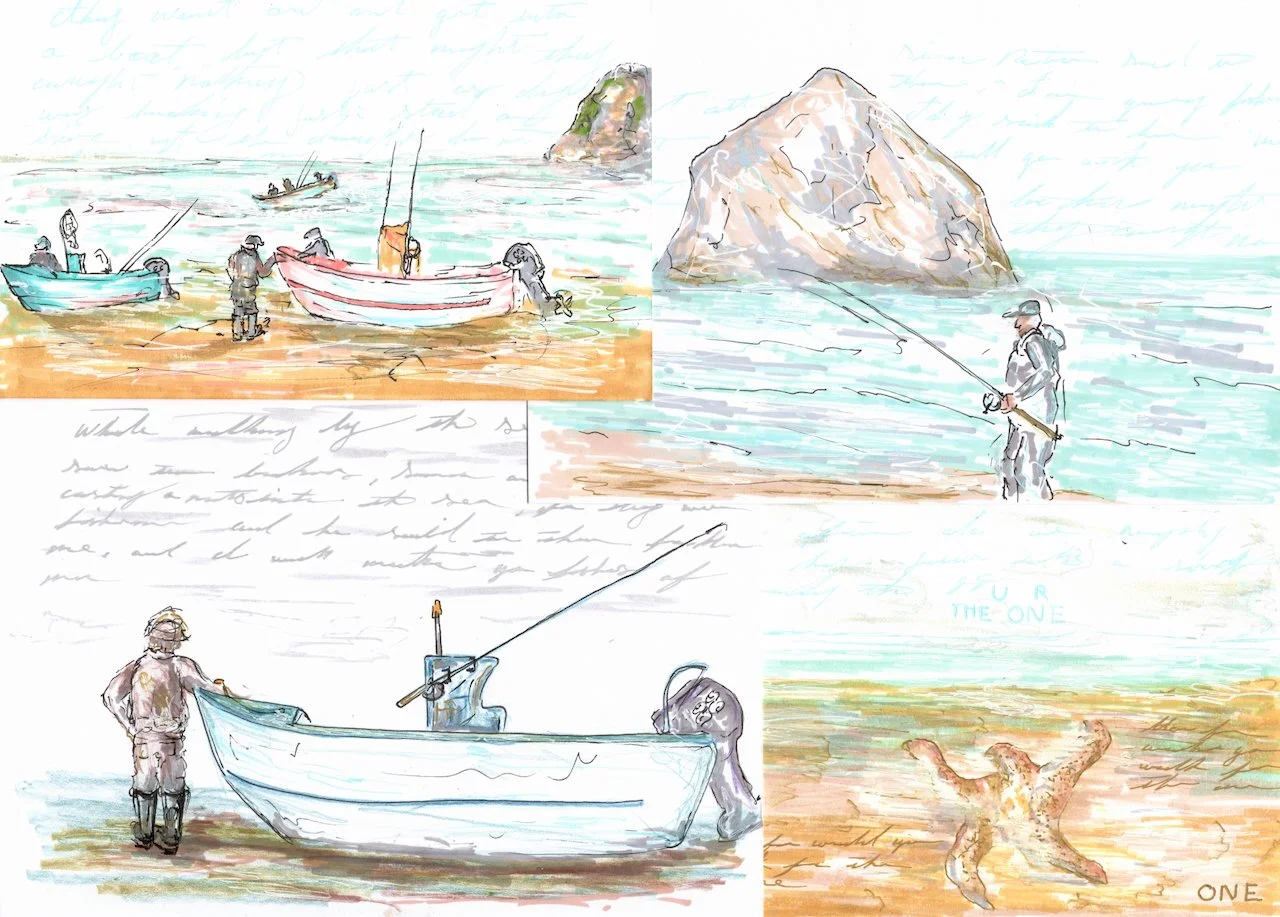
I started my week slowly, wandering the beaches of Cape Kiwanda. Leaving my standard art setup at home, I made do with some blank postcards and a handful of pencils and pens. My goal was to draw quickly, stay loose, and capture whatever caught my eye.
What stayed with me most was a lone starfish I found about a mile north of the big dune. It was stranded high and dry while the tide was still receding. It looked to be in rough shape—missing part of an arm and partially buried by blowing sand. I picked it up and carried it to the water. After a quick dip, it no longer looked quite so haggard. I filled an unused dog waste bag with cold seawater, placed the starfish inside, and began the walk back toward the tide pools.
By the time I reached the pools at the base of the dune, the starfish had regained much of its color and looked surprisingly healthy inside the bag. I chose a deep pool that appeared to be full of life and gently placed the starfish at the base of a submerged, barnacle-covered rock. Within a few minutes, it had latched on and looked right at home.
That encounter reminded me of Jesus' words in Matthew 18. He teaches that God actively pursues those who are lost and rejoices when they are found. Every life matters to Him. No one is too insignificant, too broken, or too far gone to be worth pursuing.
Matthew 18:12–14 (ESV)
"What do you think? If a man has a hundred sheep, and one of them has gone astray, does he not leave the ninety-nine on the mountains and go in search of the one that went astray? And if he finds it, truly, I say to you, he rejoices over it more than over the ninety-nine that never went astray. So it is not the will of my Father who is in heaven that one of these little ones should perish."
I don't know how that starfish ended up in the sand, but I do know it didn't need a motivational speech. It needed to be returned to the environment it was created for.
How many people around us are quietly stranded—waiting for someone to notice?
Maybe today God is inviting you to be the one who reaches out. Or perhaps you're the one who feels stranded. Either way, the heart of God remains the same: He pursues the one, restores the broken, and rejoices when they are found.
Our Delivery Matters
NEW Drawings drop on Friday
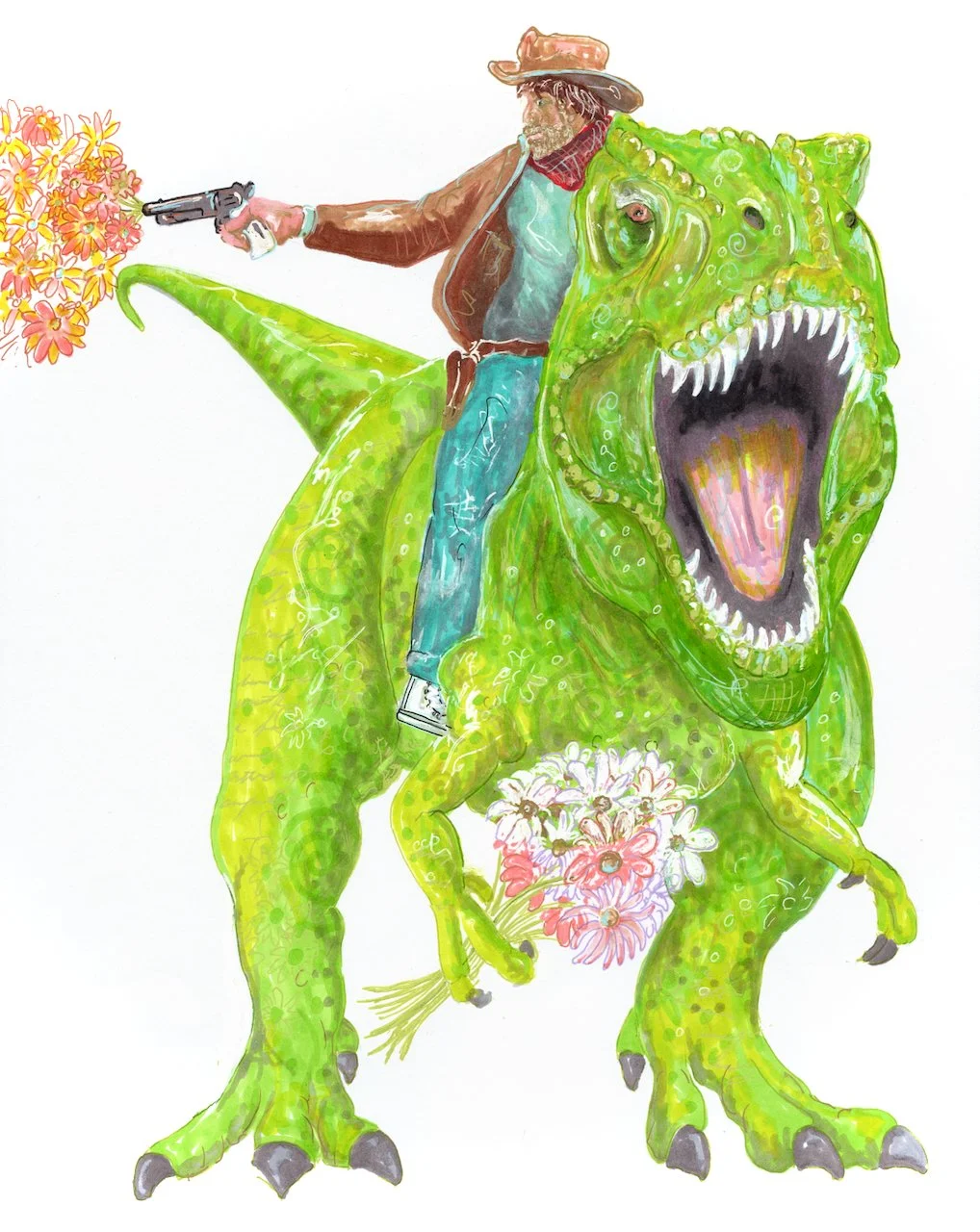
This week's drawing ended with an aha moment for me. How many times have I had the best intentions, yet my execution failed miserably? My takeaway was this: How we deliver the message is just as important as the message itself.
Scripture repeatedly reminds us that God cares not only about what we say, but how we say it.
Proverbs 15:1 (ESV)
"A soft answer turns away wrath, but a harsh word stirs up anger."
A gentle answer, gracious speech, and patient correction don't weaken the truth—they make room for it to take root.
My prayer for today:
Lord, the next time I'm ready to come in at full roar, guns blazing, remind me of Proverbs 15:1. Quiet my heart, settle my spirit, and help me speak Your truth with love and grace. Amen.
It isn't enough to carry flowers if you hand them to someone like you're starting a gunfight.
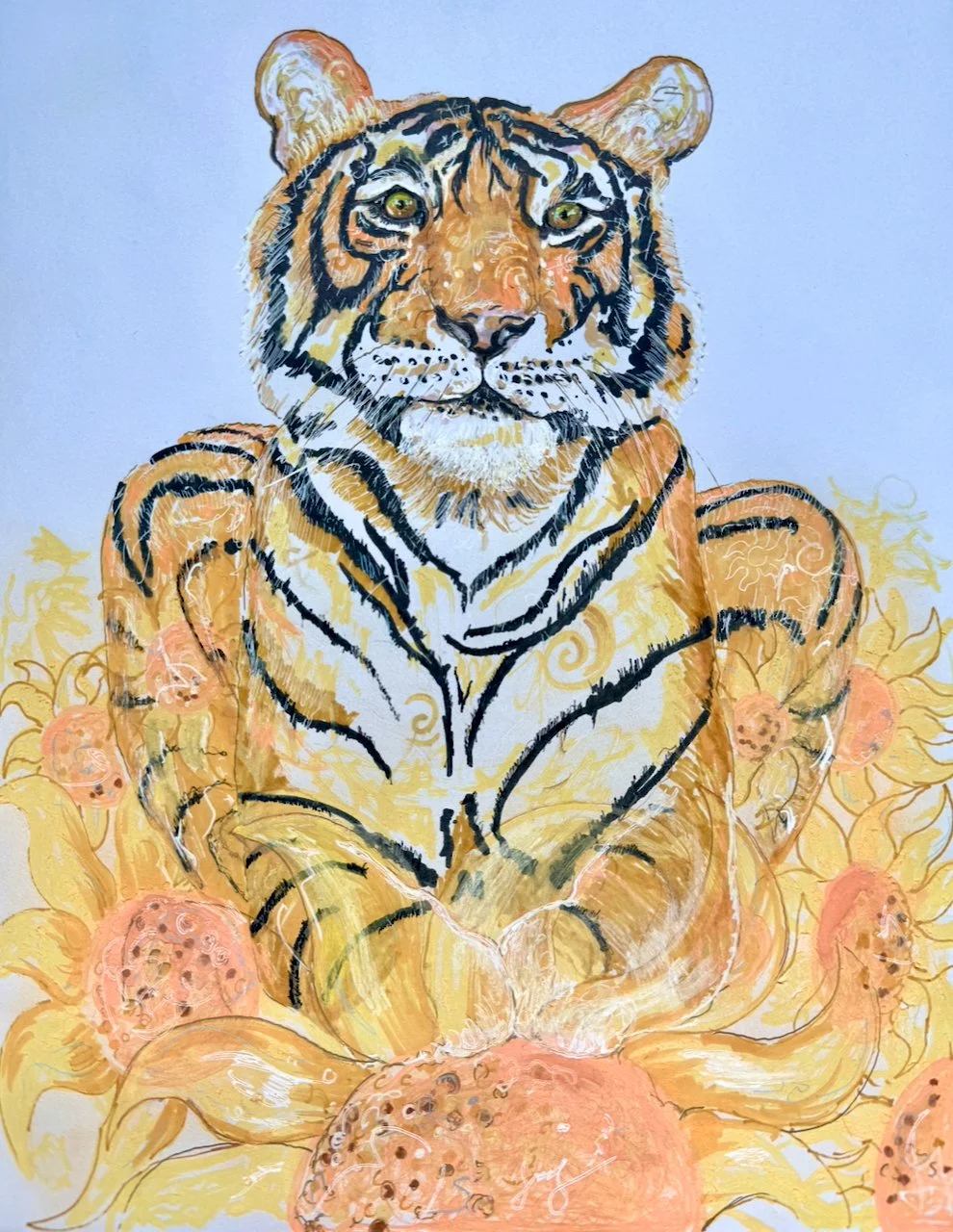
Thoughts while sketching a sunflower patch
Imagine for a moment that every scar you’ve carried became part of a story worth telling—visible as stripes, yet transformed into something beautiful.
Like a sunflower, if we continually turn our faces toward the sun, we will never find ourselves living in the shadows. It is only when we turn our backs on the sun that our shadows come into view.
In the same way, when we keep our eyes on the Son, we walk in the light as He is in the light.
“But if we walk in the light, as he is in the light, we have fellowship with one another, and the blood of Jesus his Son cleanses us from all sin.”
— 1 John 1:7 (ESV)
I am grateful for the ever-present, all-sustaining light of Jesus—a light freely given to all who turn toward Him; a penetrating light that heals the deepest wounds and creates beauty from ashes.
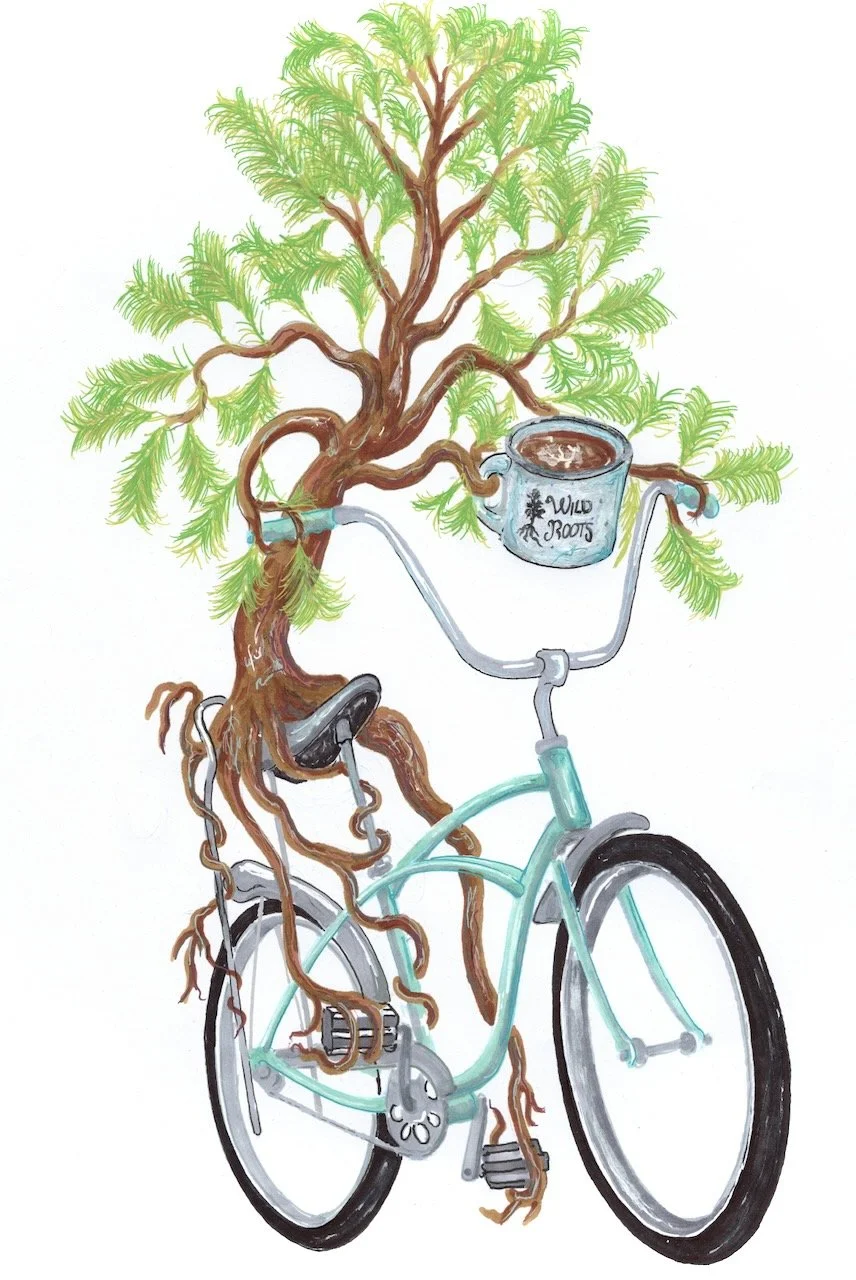
Whats in a cup of Coffee?
Full disclosure: I had six espresso shots as I worked on this drawing over the course of several days. Working the pens, my mind drifted back to my first cup of Wild Roots coffee. It was arguably the darkest and most difficult time in my life. A few days prior, we had lost our eldest son in a river accident. Life had been stripped down to its rawest elements, and my family held on to the only thing that remained tangible—our faith. Jesus not only stepped into the fire with us; He carried us and, arguably, still does.
Wait, I thought this drawing was about coffee.
Yes, back to my first cup of Wild Roots. My good friend Mark, wanting to show us a bit of love, dropped off coffee every morning for weeks. I later discovered that the owner of Wild Roots, and now my friend, Kris, donated many of those cups.
So, what’s in a cup of Wild Roots coffee? For me, it represents the love of a friend, the compassion of a barista, and a gentle touchpoint that says, “I see you.”
“When you pass through the waters, I will be with you; and through the rivers, they shall not overwhelm you; when you walk through fire you shall not be burned, and the flame shall not consume you.”
— Isaiah 43:2 (ESV)
When you visit Wild Roots Coffee in Bend, Oregon, pause, take in the aroma, and know that coffee delivered with love leaves lasting roots.
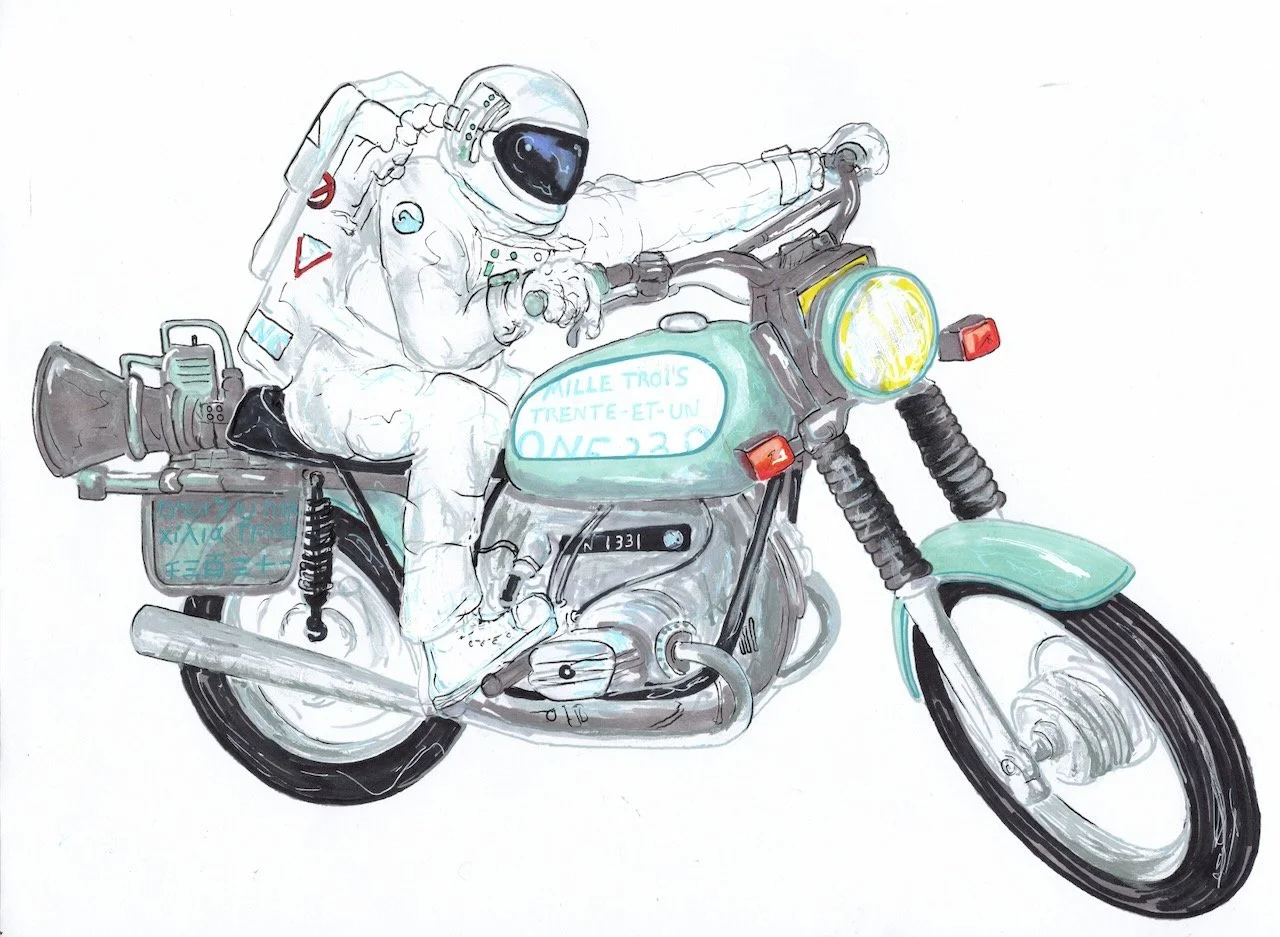
Moon Shot
This week my Sharpie markers and ink pens toyed with the idea of a trip to the Moon. At one-sixth the size of Earth, the Moon loses the gravity game and faithfully maintains its orbit around its big brother. Our naked eyes can pick out detail from 250,000 miles away, and we can study its surface in detail with a basic telescope. Yet the Moon keeps its secrets concealed—shy and hidden, there is a far side that never faces the Earth.
It remained hidden from human eyes until 1959, when the Soviet Luna 3 mission became the first to photograph the far side of the Moon. Later, in 1968, the Apollo 8 mission completed an epic voyage around the Moon, becoming the first crewed spacecraft to orbit it and giving humans their first direct view of that hidden landscape. The near side and far side differ dramatically in appearance, with the far side more heavily scared, cratered and lacking the large volcanic plains seen from Earth.
Today I turn inward, considering the hidden places in my life—the side I do not show to others: the scars, hurt, shame, or embarrassment. I pause and remember Ephesians 5:13–14:
“But when anything is exposed by the light, it becomes visible, for anything that becomes visible is light. Therefore it says,
‘Awake, O sleeper,
and arise from the dead,
and Christ will shine on you.’”
I am grateful the light of Christ does not only reveal—it redeems.
Response
Heliotropism is the movement of a plant in response to the sun. Young sunflowers are one of the best examples, facing east at sunrise, following the sun westward until sunset, then slowly resetting overnight to face east again.
The word heliotropism comes from: “helio” = sun and “tropism” = turning or response.
Chalk pens in hand, I began drawing this week with no particular destination in mind. My initial sunflower patch gradually transformed into something more fluid, making room for a sailing vessel. I slowly sketched out the boat, sails filled with purpose, taut with anticipation.
I considered my own daily routines and pondered the question: How often do I sit in the light of the “Son”? How much of my day is spent responding by turning toward Him?
This hit a bit harder when I learned that, as sunflowers mature, most stop turning. They simply face east, content to soak in the morning rays.
“The steadfast love of the Lord never ceases;
his mercies never come to an end;
they are new every morning;
great is your faithfulness.”
Lamentations 3:22–23 (ESV)
I pray today that I would continue turning toward the God who sustains me, never growing content with yesterday’s light.
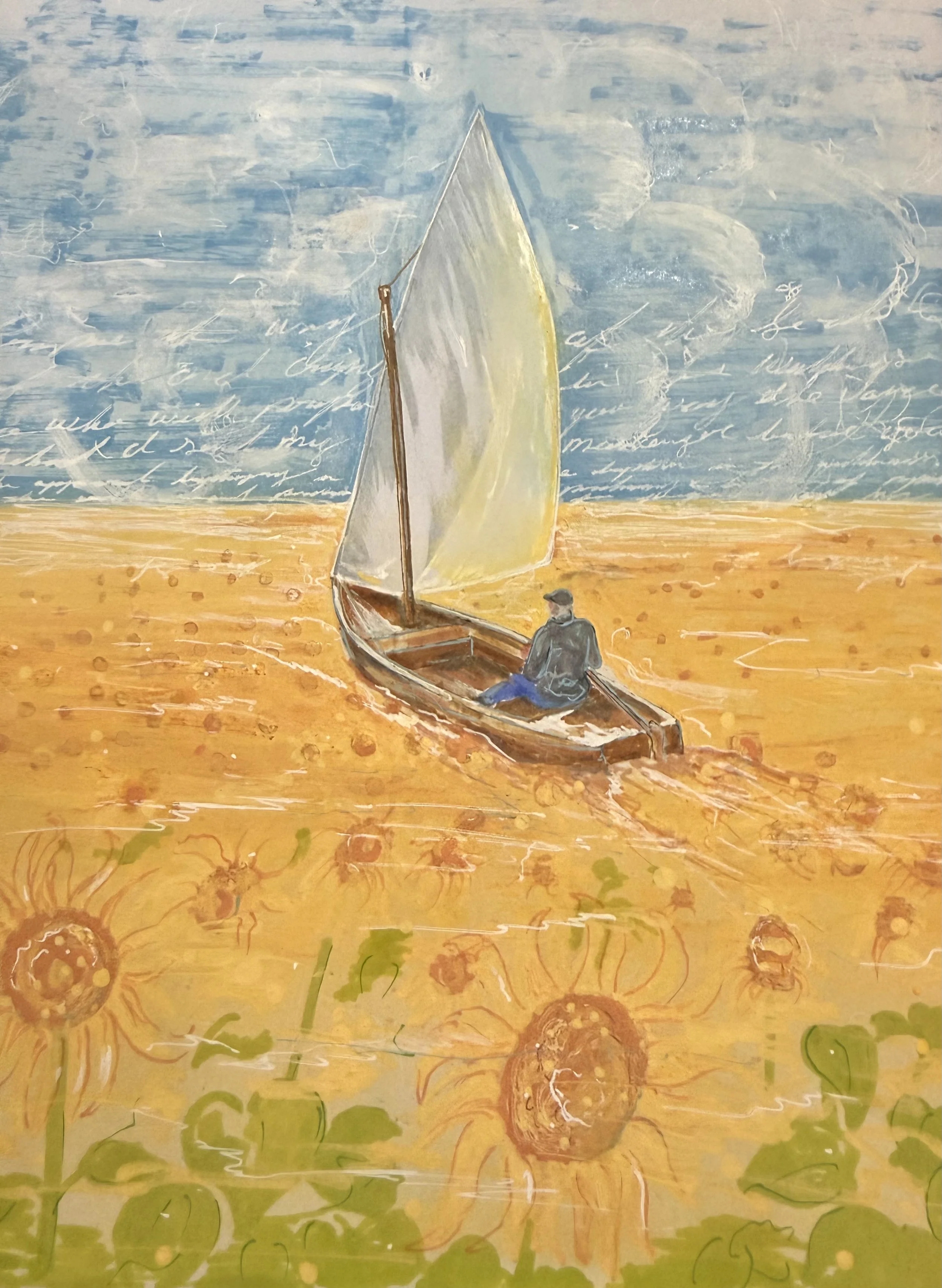
Waiting
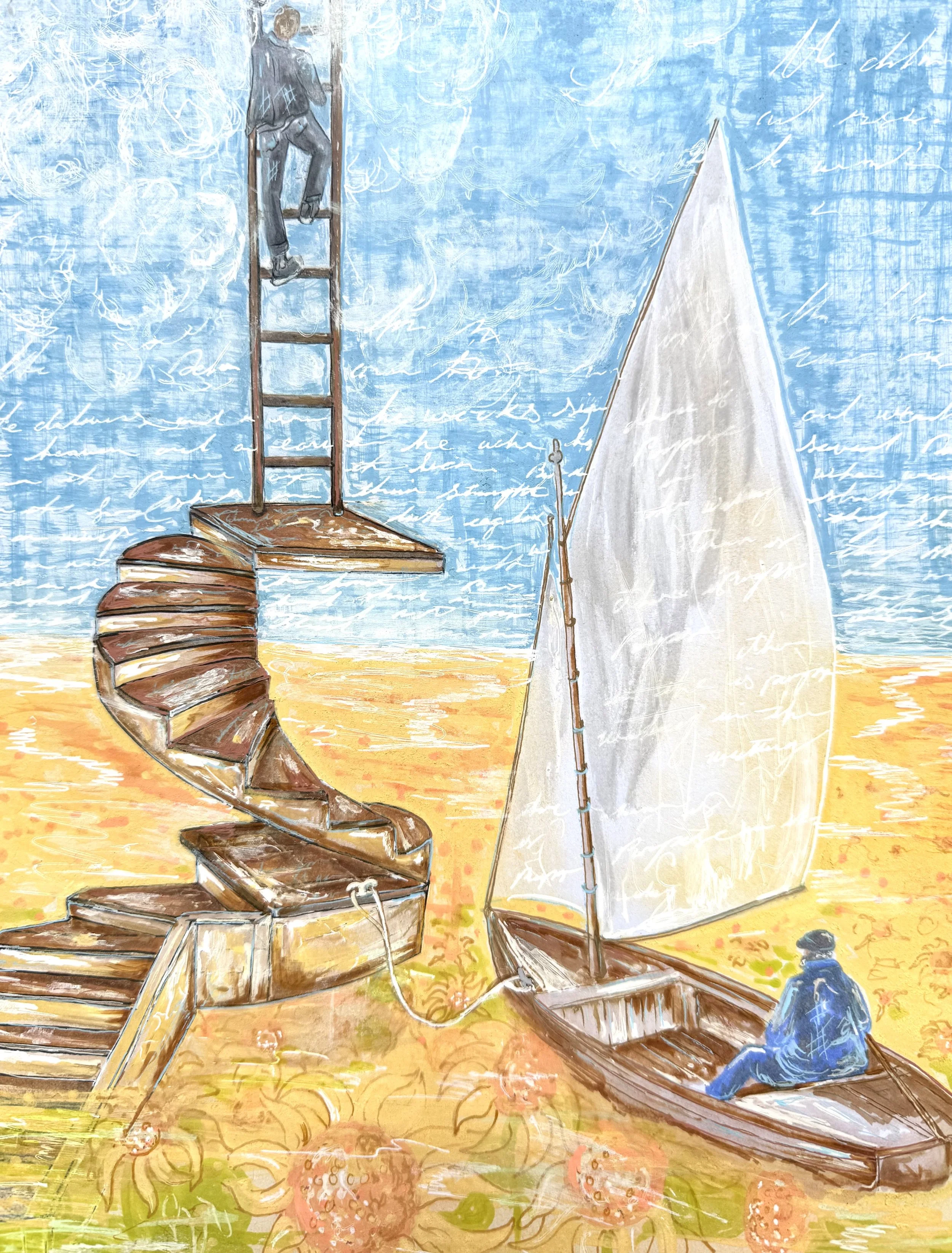
I found myself back in the boat this week. Well, at least my chalk pens and Sharpie markers seemed bent on exploring more uncharted waters. This week, I contemplated the concept of waiting.
A sunflower seed can lie dormant in the soil for up to five years before finally sprouting. Most emerge within weeks, but some fall or are placed in spots that delay germination. Possibly sheltered by a rock, surrounded by hard, dry soil, or simply starved of moisture, they remain hidden beneath the surface, waiting.
Back to the drawing. Two responses to life's seasons of delay came to mind: one of quiet contemplation and one of nervous energy and action. I personally tend to lean toward the latter.
This journey, specifically the man sitting tied to the dock, made me think of one of my Bible heroes, Daniel. Likely in his 80s, he found himself in the place between the promise and the deliverance. His faith was tested to the limit, and his only weapon was a steadfast trust in the Lord.
He did not scurry about. He did not yell or scream. He simply sat and trusted. I imagine the first few hours were intense, but as time went on, it became apparent that God was keeping the jaws of the lions shut.
Today, I ask myself a simple question: How has God asked me to remain patient in a season of delay, and how do I muster a Daniel-like faith?
Daniel 6:22 (ESV)
"My God sent his angel and shut the lions' mouths, and they have not harmed me, because I was found blameless before him; and also before you, O king, I have done no harm."
Daniel demonstrated faith that was built over the course of 80-plus years. The night he spent in the lions' den was not his first encounter with uncertainty, nor would it be his last. The trust that carried him through that dark night had been forged through decades of walking faithfully with God.
What about the guy on the ladder? That is a story that will have to wait.
To be continued...
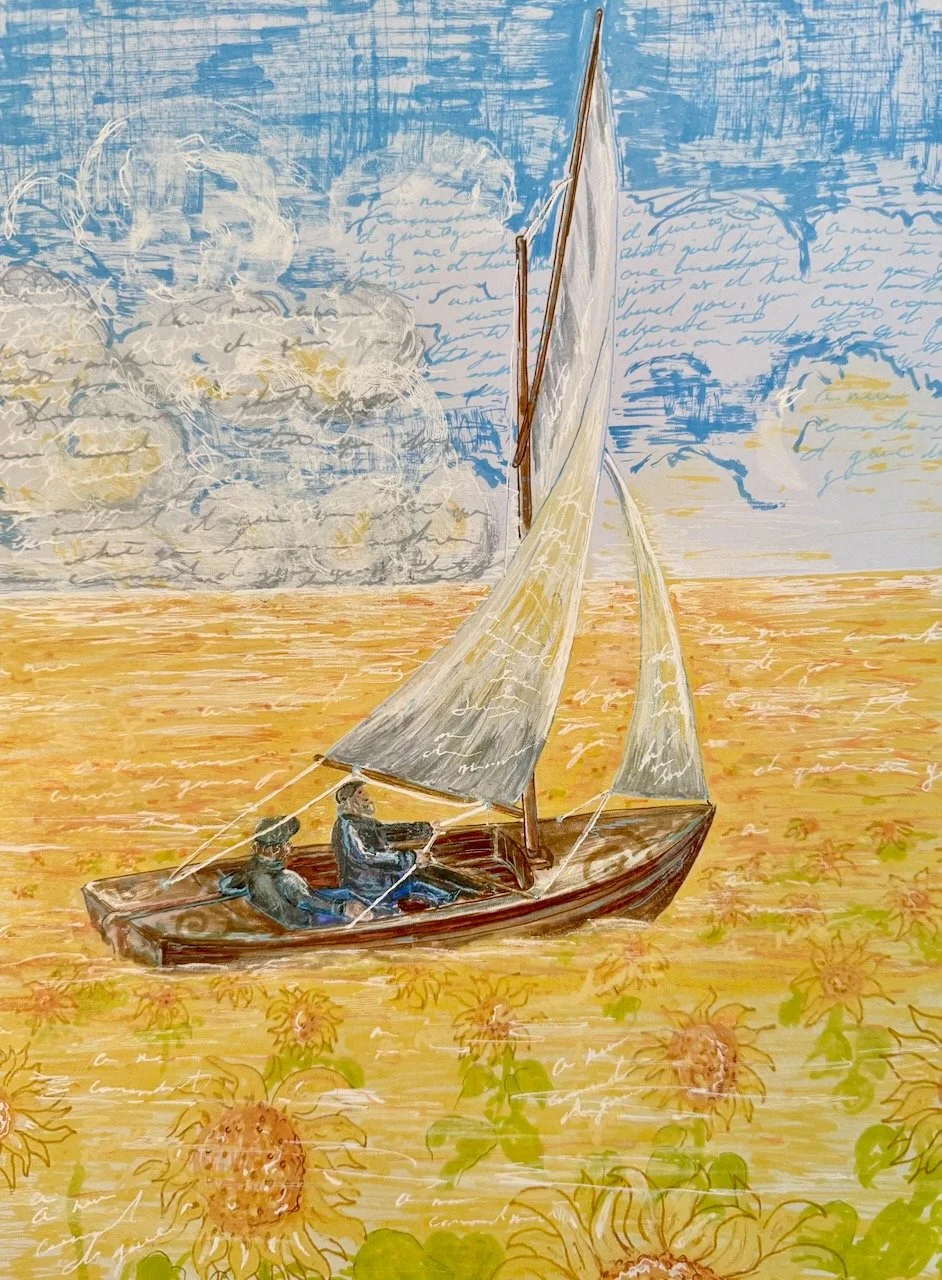
Interrupted in the best kind of way
A single sunflower seed has the potential to produce hundreds more. Given enough time, those seeds can produce thousands, then millions. It's remarkable to think that one small seed could eventually become an ocean of sunflowers.
As my chalk pens once again journeyed through this week's drawing, I found myself reflecting on the power of a single seed. You may have noticed that our captain has picked up a companion, not just a passenger, but an extra hand to aid in life's adventure.
My wife often reminds me, "If you are impatient and desire to go fast, you will most likely go alone. But if you want to go far, take a breath, be patient, and go together."
God has interrupted my plans several times over the last few weeks. Each time, I had a choice. I could ignore His gentle prompting and continue with my agenda, or I could trust that He saw something I didn't. I paused and realized that He wanted me to tend a seed He cared deeply about. Not once, but three times, I found my week interrupted for this purpose.
Sometimes the seeds God asks us to tend aren't projects or opportunities. They're people.
We are reminded in John 13:34:
"A new commandment I give to you, that you love one another: just as I have loved you, you also are to love one another."
I am grateful for the experience of being interrupted. I am thankful that I trusted God enough to say yes. Whether I ever see the full harvest is not mine to determine. My responsibility is simply to tend the seed He places before me and trust Him with the growth.
Who is God placing in your path today? How is He asking you to show them His love?
Who’s Driving
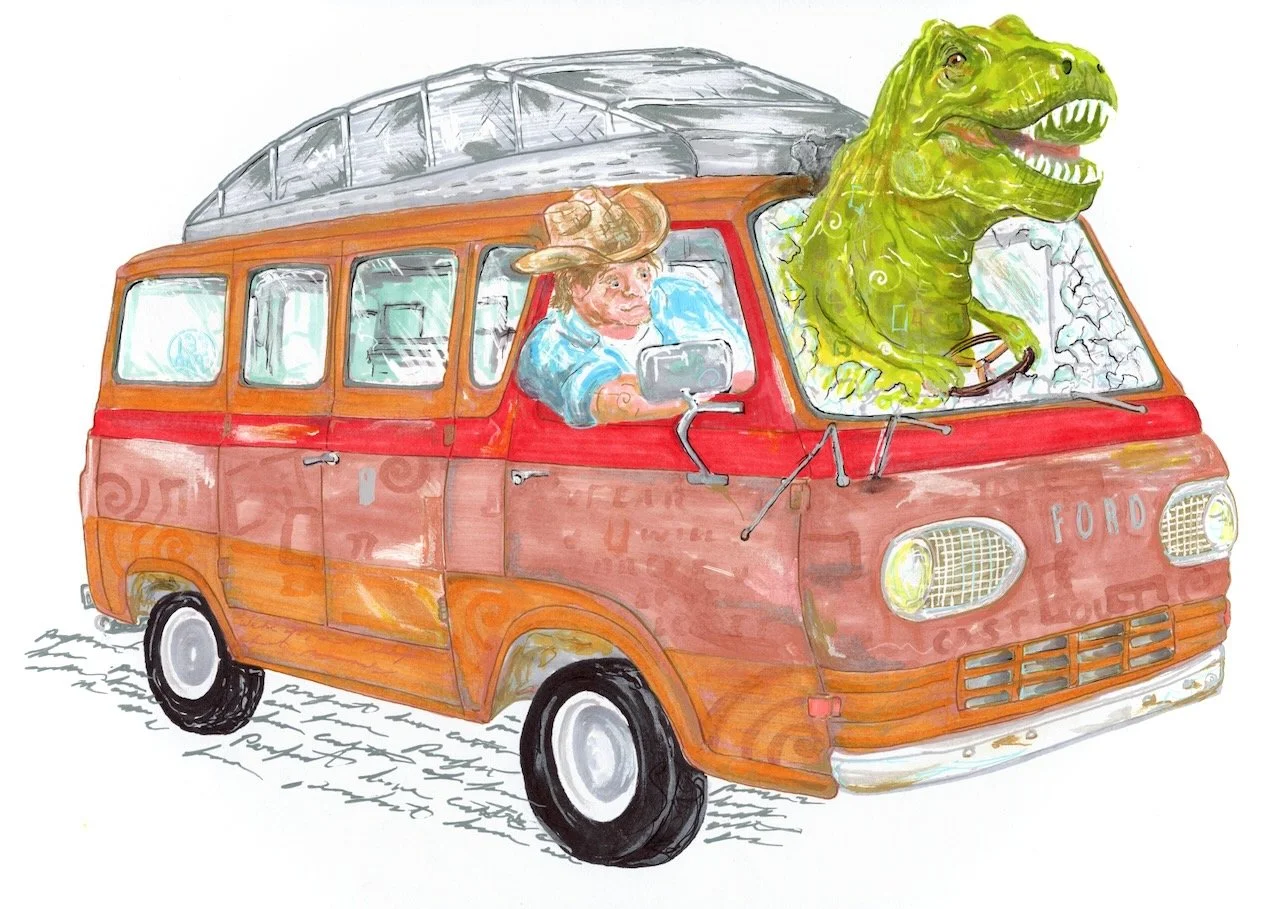
This week I asked myself the question: How often are you allowing fear to drive you?
My artistic brain turned this into a fun and thought-provoking pen-to-paper exercise, the results of which may make you laugh, cringe a bit, or possibly reflect on how often you hand the keys to fear.
A perceived threat, whether physical danger, social rejection, anxiety, or even a painful memory, activates the amygdala, which in turn signals the hypothalamus, autonomic nervous system, and adrenal glands, letting them know that “something may be wrong.” This happens fast, often before rational thinking catches up. We quickly find ourselves in one of three modes: fight, flight, or freeze.
The fear response, by design, kicks us into action and helps us avert danger, but we were never meant to live in, or even camp out in, fear.
We are reminded in John 4:18 (ESV) that:
“Perfect love casts out fear.”
Love has been shown to reduce stress hormones, improve immune function, increase confidence, and help with emotional regulation. But the love that John speaks of is deeper still. It is the steadfast love of God, a love that sustains, refreshes, and never stops. It carries within it the very explanation for why we love at all:
“We love because he first loved us.” (1 John 4:19, ESV)
Today I am reminded that when I find myself in the passenger seat of fear’s van, all I need to do is look to my Heavenly Father and remember: His perfect love casts out fear.
If time could pause long enough for ink to remember it.
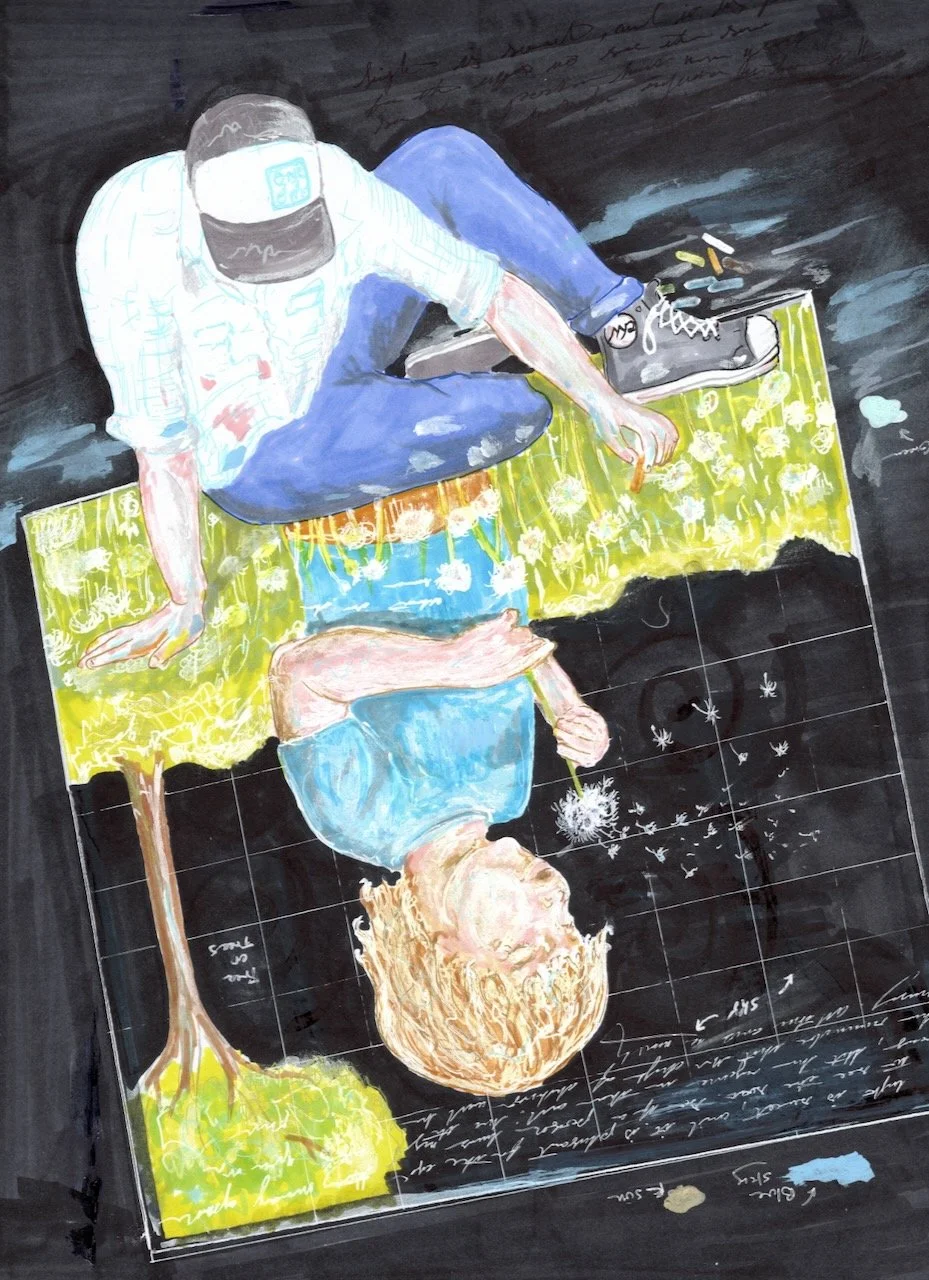
The Hebrew word “hevel” means vapor, mist, or smoke, and is most famously used in Ecclesiastes, where it is translated into the English word “vanity.” It represents something temporary, fleeting, and difficult to hold onto.
This week, I drew myself drawing my younger self. In the process, I was reminded that the dandelions I once scattered freely with puffed-up cheeks are now the very weeds I try to remove from my yard.
Solomon captures this tension beautifully in Ecclesiastes:
“Light is sweet, and it is pleasant for the eyes to see the sun.
So if a person lives many years, let him rejoice in them all; but let him remember that the days of darkness will be many. All that comes is vanity.”
Ecclesiastes 11:7–8 (ESV)
Take a moment today to remember the unencumbered joy of your younger self. Maybe even pick a dandelion or two, recapture a moment of childlike abandon, puff up your cheeks, and set the tiny seeds free.
In the Beginning
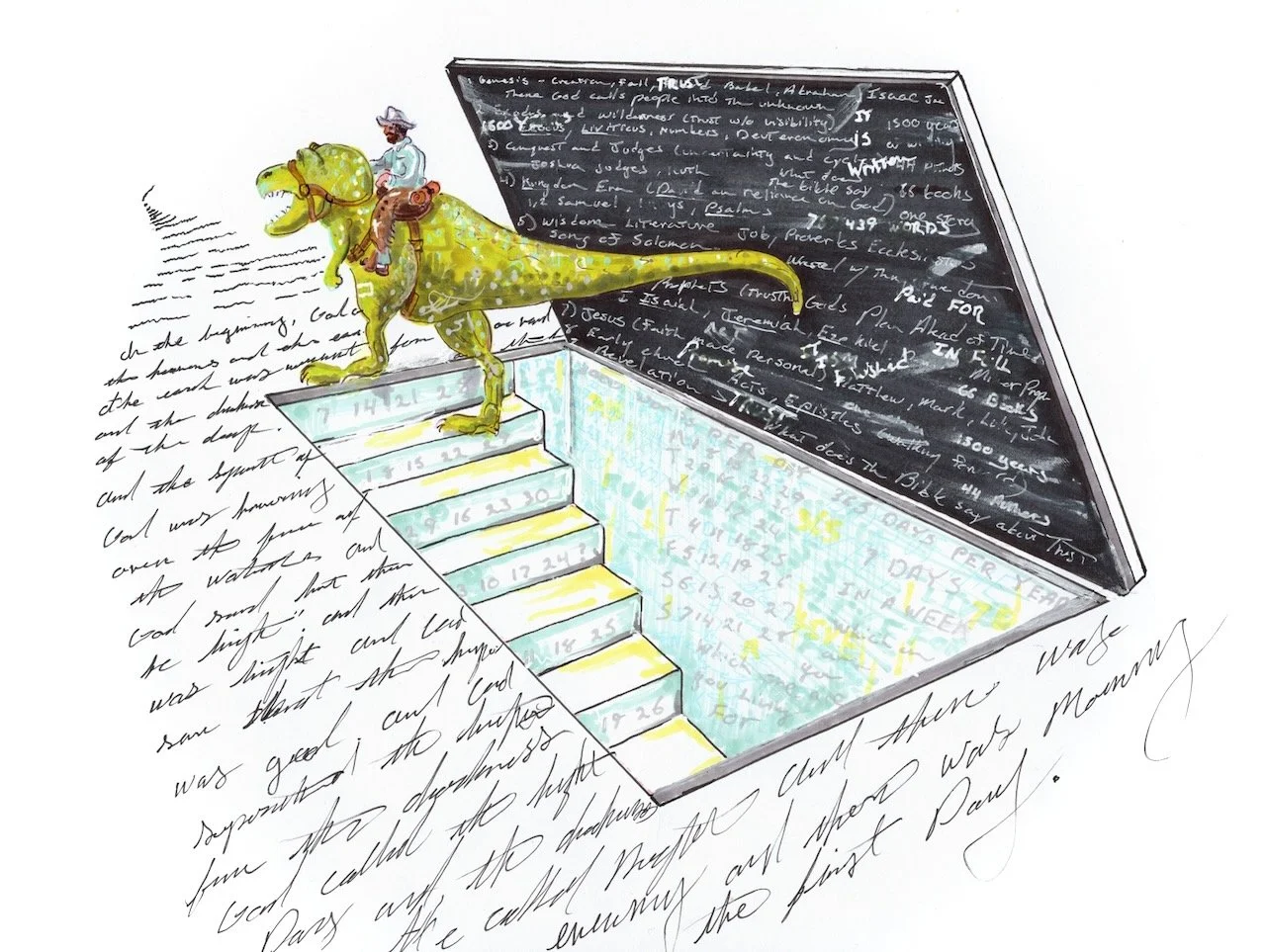
The ink from my pen took me on a journey all the way back, well, at least as far back as my mind can imagine, to a time before our world as we know it existed.
Before there was anything we now recognize, there was no form, no structure, no light. To our untrained eyes, it would have appeared as a vast nothingness.
Yet even there, God was present.
There was purpose.
There was vision.
There was a design known only to the Architect Himself.
A canvas not yet formed, yet filled with potential.
A universe envisioned, yet still unseen.
“In the beginning, God created the heavens and the earth. The earth was without form and void, and darkness was over the face of the deep. And the Spirit of God was hovering over the face of the waters. And God said, ‘Let there be light,’ and there was light.”
— Genesis 1:1–3 (ESV)
His tool of creation: the Word.
Imagine, for a moment, speaking the very universe into existence.
Not built, not assembled,
but simply spoken.
Not something my mind can quite wrap around,
yet something that draws us in,
into contemplation,
into reverence,
into wonder.
The scale.
The order.
The precision.
What we attempt to describe through math, astronomy, and physics
is completely beyond us.
Yet to the Architect, it is not complex.
It is not distant.
It is simply an expression of who He is.
“In the beginning was the Word, and the Word was with God, and the Word was God.”
— John 1:1 (ESV)
Thermodynamics
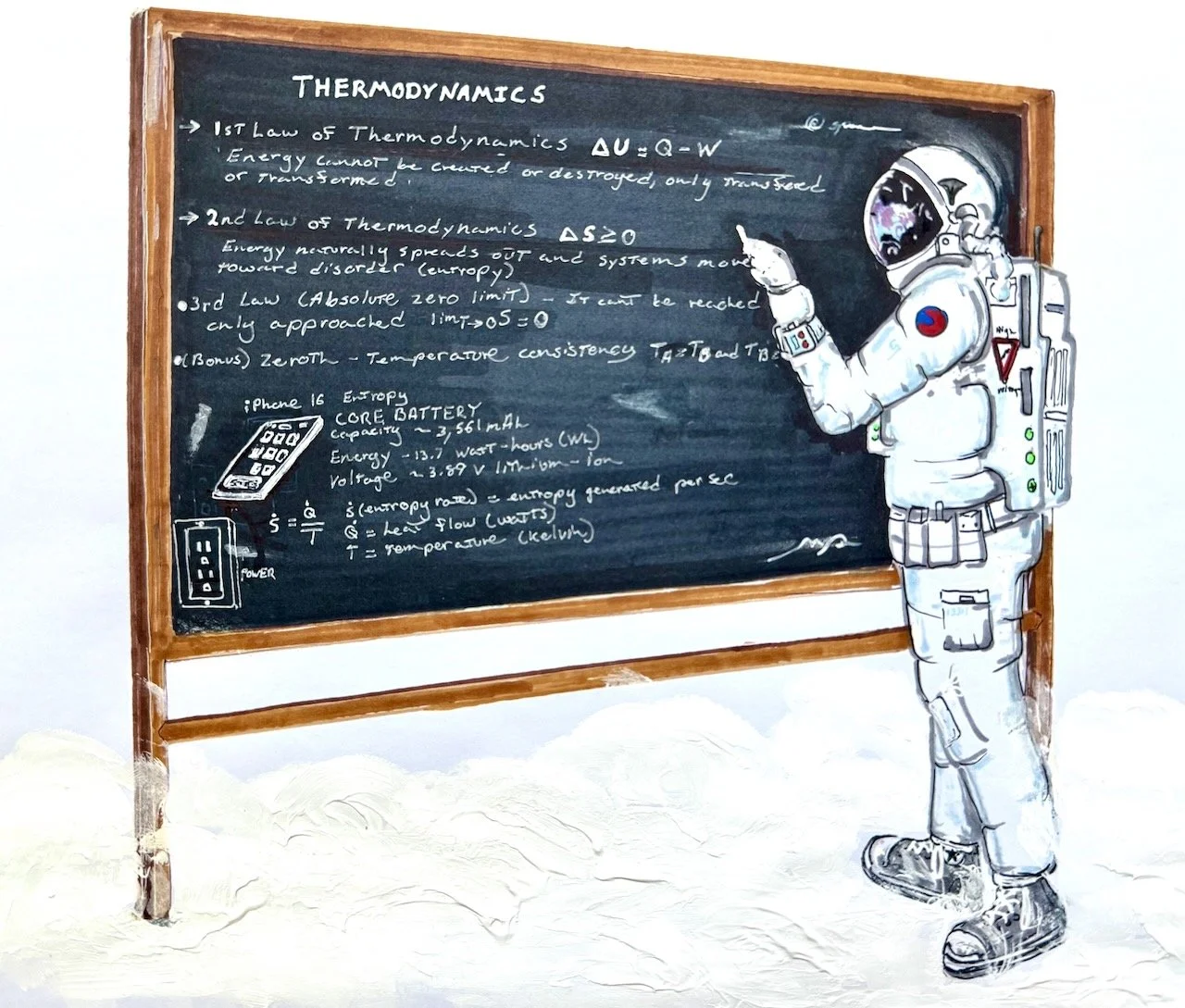
This week I was dealing with a fast-draining battery on my iPhone. It sent me down a path I didn’t expect, thinking about thermodynamics and my battery’s steady drift toward entropy.
The First Law of Thermodynamics reminds us that energy cannot be created or destroyed, only transferred or transformed. I charged my phone, but the energy didn’t stay put. It turned into heat, leaving me with a hot pocket and a dead battery.
The Second Law of Thermodynamics tells us that energy spreads out and systems move toward disorder. Batteries fail, tires wear out, rooms get messy, and things fall apart.
Here’s what stuck with me: we live in a world full of energy, yet we cannot hold on to it. We can recharge, repair, and replace, but everything we touch eventually runs down.
Nothing we build sustains itself. Nothing we manage stays in order on its own.
And yet, in the universe, we see design, structure, order, and purpose.
That tension points to something far greater.
“He is before all things, and in him all things hold together.”
Colossians 1:17 (ESV)
Everything I touch runs down, but everything He holds together does not.
Not Just a Rock
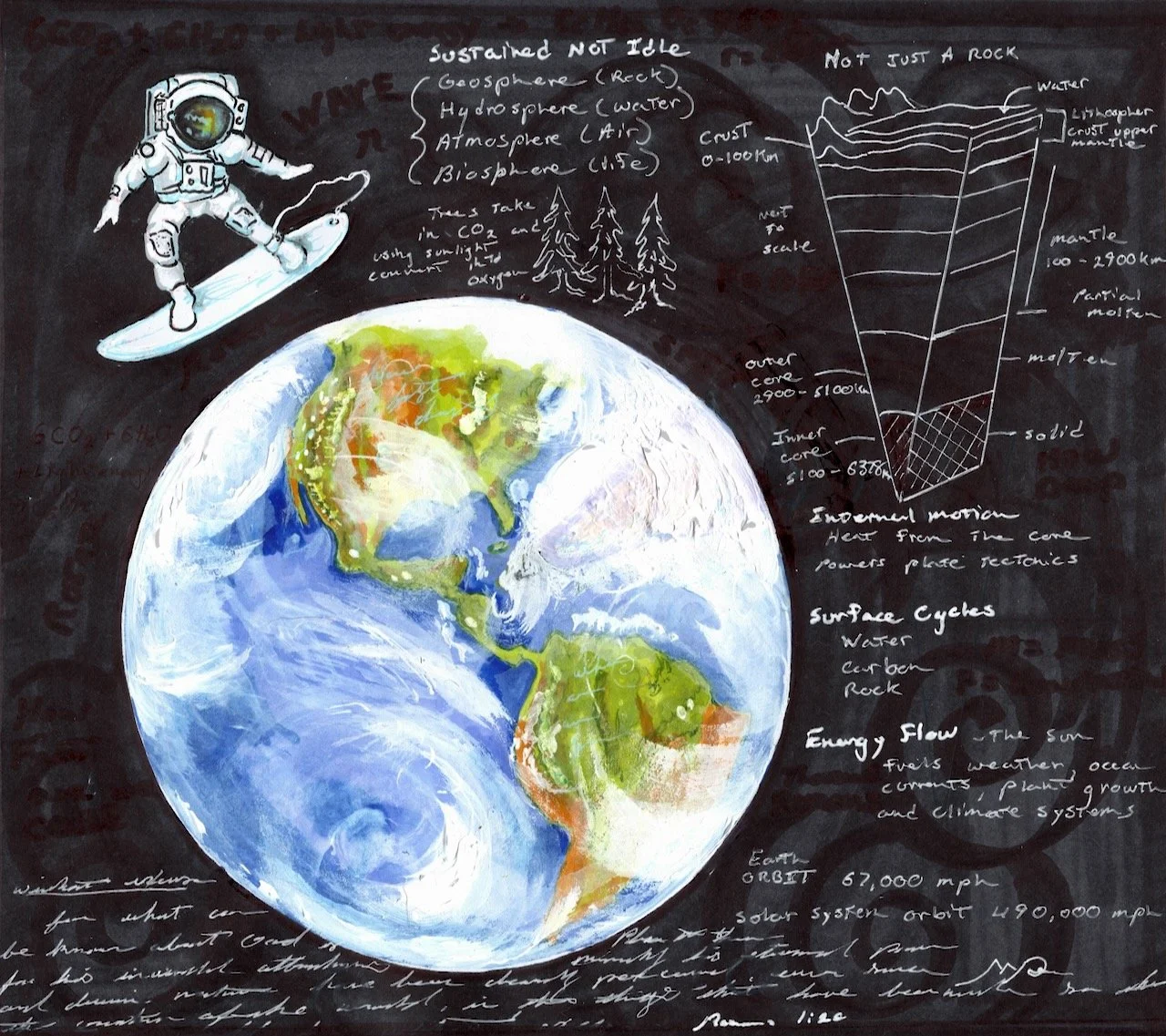
Step outside and, more than likely, like me, you’ll see only a small slice of the world: a patch of dirt, a few trees, maybe a mountain or two. Zoom out, and a larger canvas appears, one made up of deeply interconnected systems. Recent images from the Artemis II crew remind us just how breathtaking our planet truly is.
As I worked on this week’s drawing, I was reminded that the Earth is not a static rock. It is an interconnected, symbiotic collection of systems so dependent upon one another that life can only be described as miraculous.
I was reminded again on a trail run with my dog, Knox. As we moved down the trail, we exhaled CO₂, the very thing trees need. In turn, trees take in CO₂, combine it with sunlight, and through photosynthesis release O₂, the very thing we need to breathe.
Zoom back out, and the Earth is in constant motion. The geosphere recycles rock. The hydrosphere drives the water cycle. The atmosphere produces weather and forms an invisible, yet very real, protective layer. The biosphere overflows with life, so much so that we are still discovering it.
Life is not an accident. Design, order, and purpose can be seen all around us. Sometimes we simply need to zoom out.
Today, I am in awe of the Designer. I am speechless at His creation, and I shiver in reverence and stand in awe as I consider His command and power.
“By the word of the Lord the heavens were made, and by the breath of his mouth all their host. He gathers the waters of the sea as a heap; he puts the deeps in storehouses. Let all the earth fear the Lord; let all the inhabitants of the world stand in awe of him! For he spoke, and it came to be; he commanded, and it stood firm.”
Psalm 33:6-9 ESV
Identity
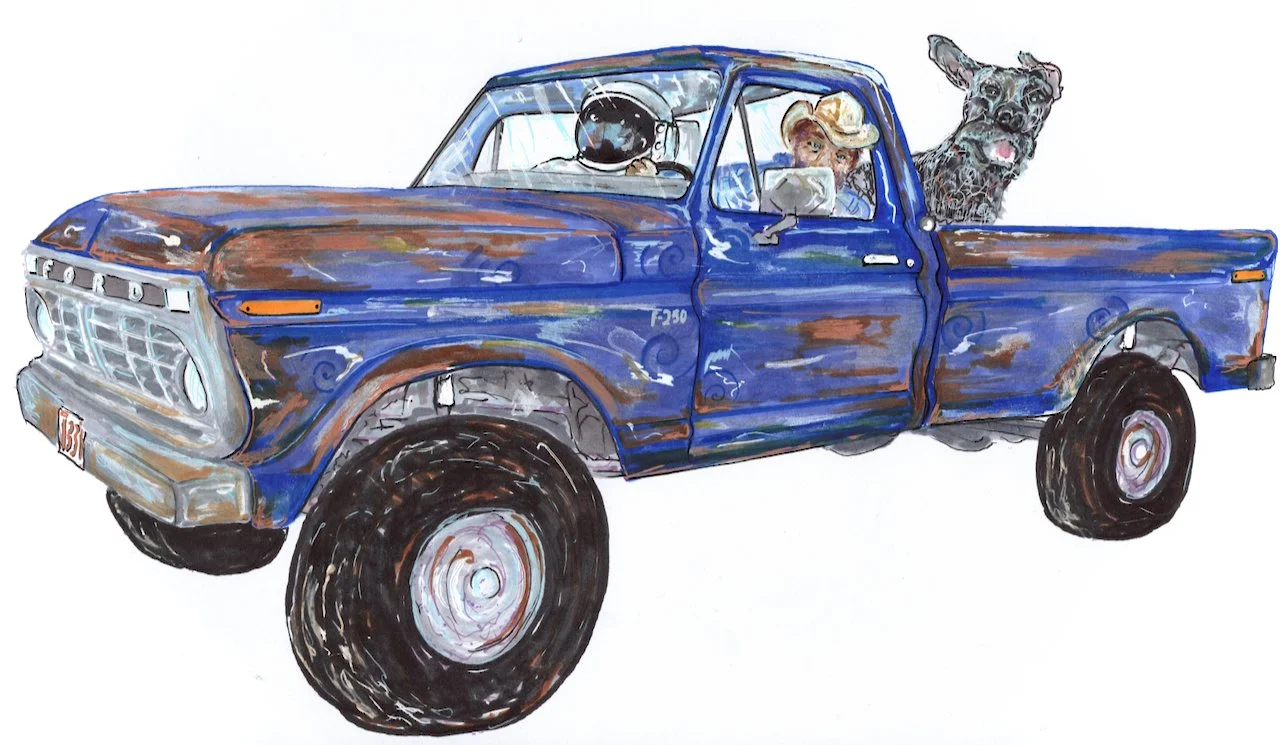
As you look at this drawing, which character do you identify with most?
The weathered cowboy—hard stock, quick to act, rough around the edges, yet tender toward a friend in need.
The astronaut—driven, a whiz at troubleshooting, prepared for harsh environments, with an undeniable desire to explore.
The trusty dog—rain or shine, like it or lump it, you’re along for the ride.
If you’re like me, you may feel like the cowboy today, the astronaut tomorrow, and the dog somewhere in between. In fact, you may have experienced all three before the day is done.
Our circumstances often shape how we feel and how we respond. The reality is this: living, working, and interacting with others brings constant change. Different moments will pull different parts of you to the surface.
Question #2: In a sea of personalities, opportunities, experiences, problems, and decisions, how do you stay grounded?
For me, it starts and ends with time in the Word. God is the only One who truly knows who He created me to be, so I return to Him morning and evening for guidance and for a peace that not only surpasses understanding, but steadies me as I navigate this wild and wonderful world.
1 Corinthians 15:58 (ESV)
“Therefore, my beloved brothers, be steadfast, immovable, always abounding in the work of the Lord, knowing that in the Lord your labor is not in vain.”
Stay grounded!
Keep your eyes on the prize
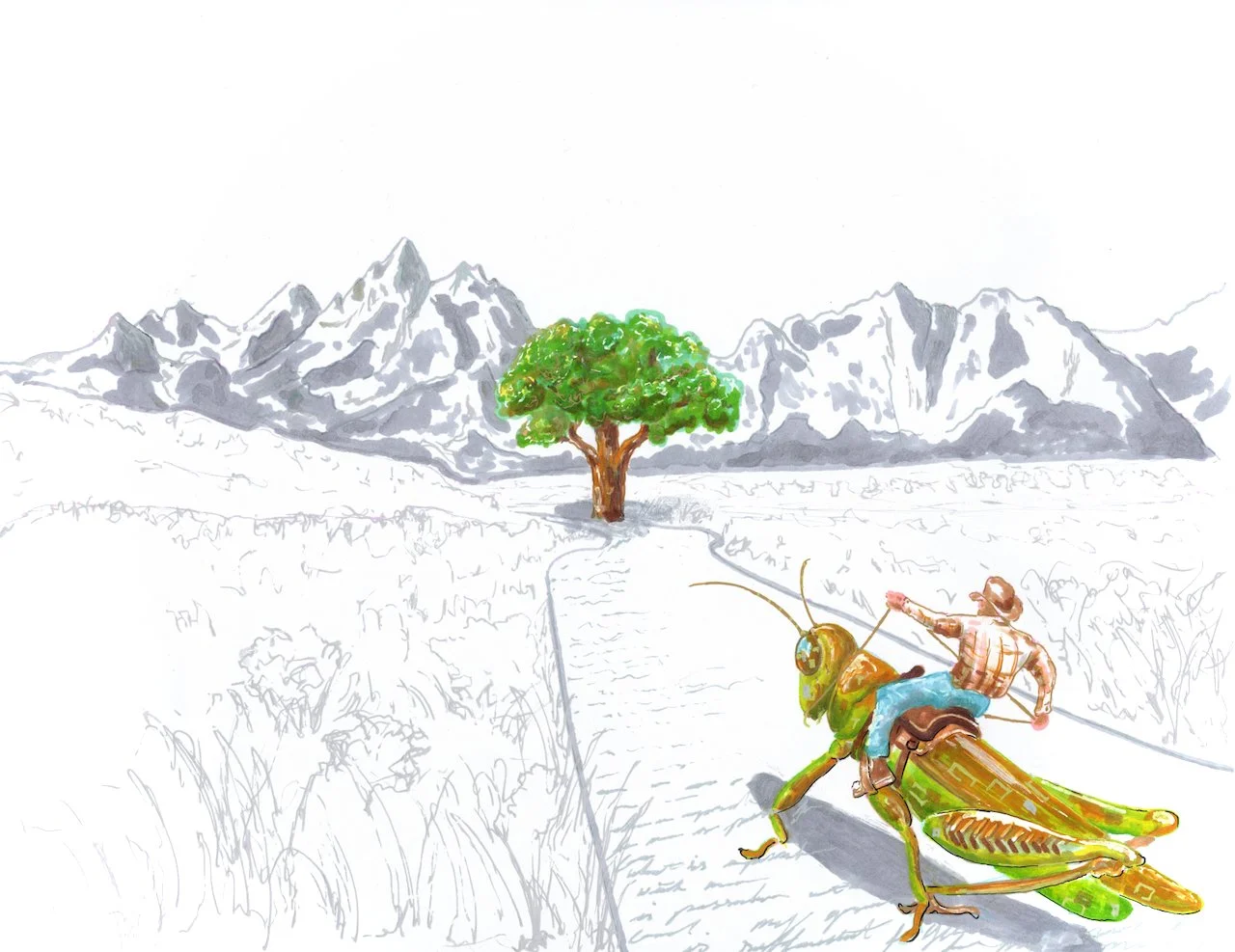
Grasshoppers jump like living compound bows: they cock their hind legs, load elastic energy into their bodies, lock it in with a built-in latch, and release it in a split second, launching themselves into motion at roughly 10–20 times the force of gravity. They are designed to move forward.
In comparison, their backward jumps are short and inefficient, lacking power and control. The movement is more like a misfire than a true leap.
I suppose this is the very reason I selected a grasshopper riding cowboy for this week’s drawing. My mind often longs to go back, but lacking a proper time machine, I must focus on what is before me.
I take a subtle nudge from Isaac Newton and remember that an object in motion tends to continue in a straight line unless another force intervenes. There are always forces that try to redirect us, so I must stay intentional about the direction I’m moving.
So I fix my eyes on the prize and persevere, just as it says in Hebrews 12:2 (ESV):
“Looking to Jesus, the founder and perfecter of our faith, who for the joy that was set before him endured the cross, despising the shame, and is seated at the right hand of the throne of God.”
Lord, just as a grasshopper releases stored strength into each leap, help me release what is behind me and move into what You are calling me toward. Keep my eyes fixed on You, steady my steps, and give me the courage to move forward with purpose. Amen.
Imagination
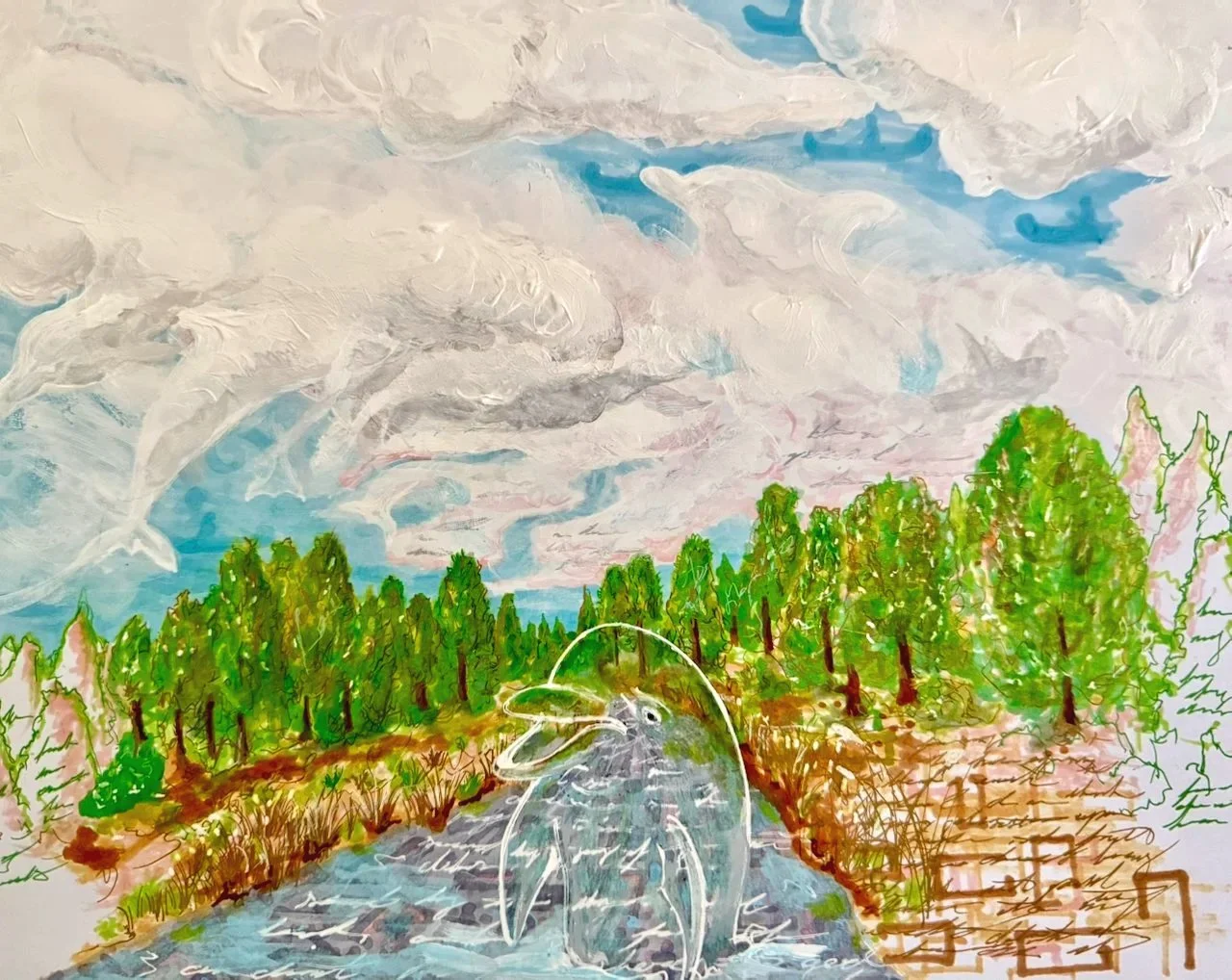
I remember, at a very young age, riding in the back of a pickup truck with my mom and two sisters on a drive over Snoqualmie Pass. This was the age of metal dashboards, no seatbelts, and trucks that had yet to be introduced to the extended cab. The car was broken down, so we laid sleeping bags in the bed of the truck and headed out. What makes this memory so vivid is a game my mom taught me. She told us to look up at the clouds and tell her what we saw. In doing so, she opened my eyes to the ever-changing shapes within them.
This memory came flooding back during a quiet walk along a gravel road earlier this week. I looked up and saw the hint of a dolphin in the clouds. That image inspired this week’s drawing. The gravel path became fluid, the dolphins more defined, and the two worlds collided into a collage of reality and imagination.
Our ability to imagine, dream, ideate, and express is remarkable. It is one of the things that sets us apart, yet it remains something science cannot fully explain. We can observe it, but we cannot account for its origin.
Scripture gives us insight:
“So God created man in his own image,
in the image of God he created him;
male and female he created them.”
— Genesis 1:27 (ESV)
We are made in the image of a creative God. The same God who formed the heavens and shaped the clouds has given us the ability to see beyond what is and imagine what could be.
Our creativity is not accidental. It is a gift, and in it, we reflect the very nature of our Creator.
A bearer of precious seed went out to plant.
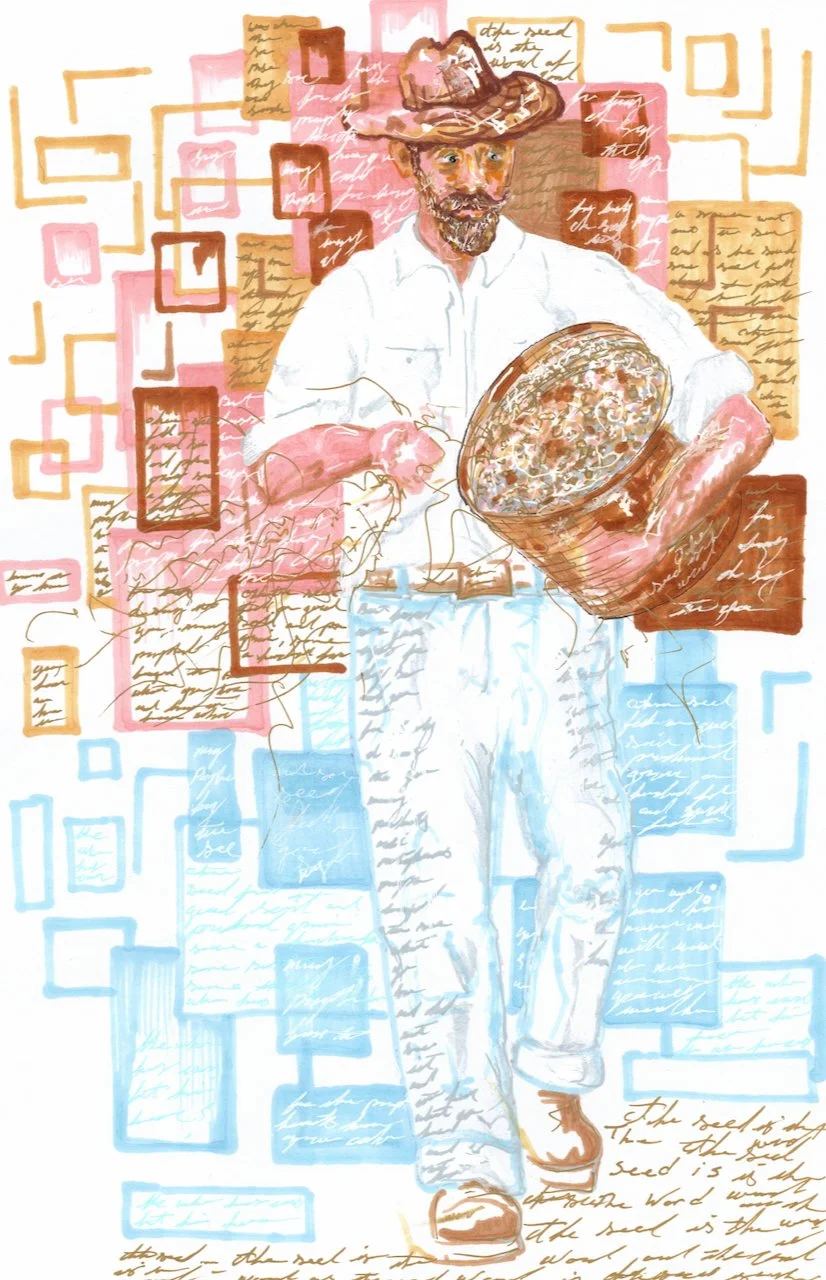
A bearer of precious seed went out to plant. He scattered it freely and generously, paying little attention to the condition of the soil. Some seed fell on hard places. Some landed on dry, moisture-starved ground. Some fell among weeds and thorns. And some settled into deep, rich, fertile soil.
Every seed carried extraordinary promise. Each one was capable of producing an incredible harvest. It could even be said that no finer seed has ever been scattered.
As time passed, the seeds that fell into good soil produced remarkable crops. The rest, even if they sprouted for a moment, withered under harsh conditions.
All except one.
One seed slipped into a narrow crack in the ground and disappeared from sight. Hidden away, it lay dormant for a time. Then the spring rains came. Water found its way into the crack, softening the soil around the seed and awakening the life within. Slowly, roots pushed downward until they reached the richer soil below.
What began quietly eventually grew strong.
In time, that single seed yielded a hundredfold, producing the very seed the bearer would scatter again the next season.
I wrote this after reading Matthew 13:1–43 in the Gospel of Matthew, where Jesus shares several Parables of Sowing.
At first glance, the lesson seems simple: be good soil. But the longer I sat with the parable, the more I realized that most of us have spent time in difficult ground. There are seasons when our hearts feel hard, dry, or crowded by the worries of this world.
Perhaps that is why the sower scatters his seed so generously.
He knows that sometimes we find ourselves in barren places.
And sometimes
we are hidden in the cracks.
Yet the seed is still alive,
still filled with promise.
His rain has a way of finding us.
Matchbox Adventure…
NEW Drawings drop on Friday
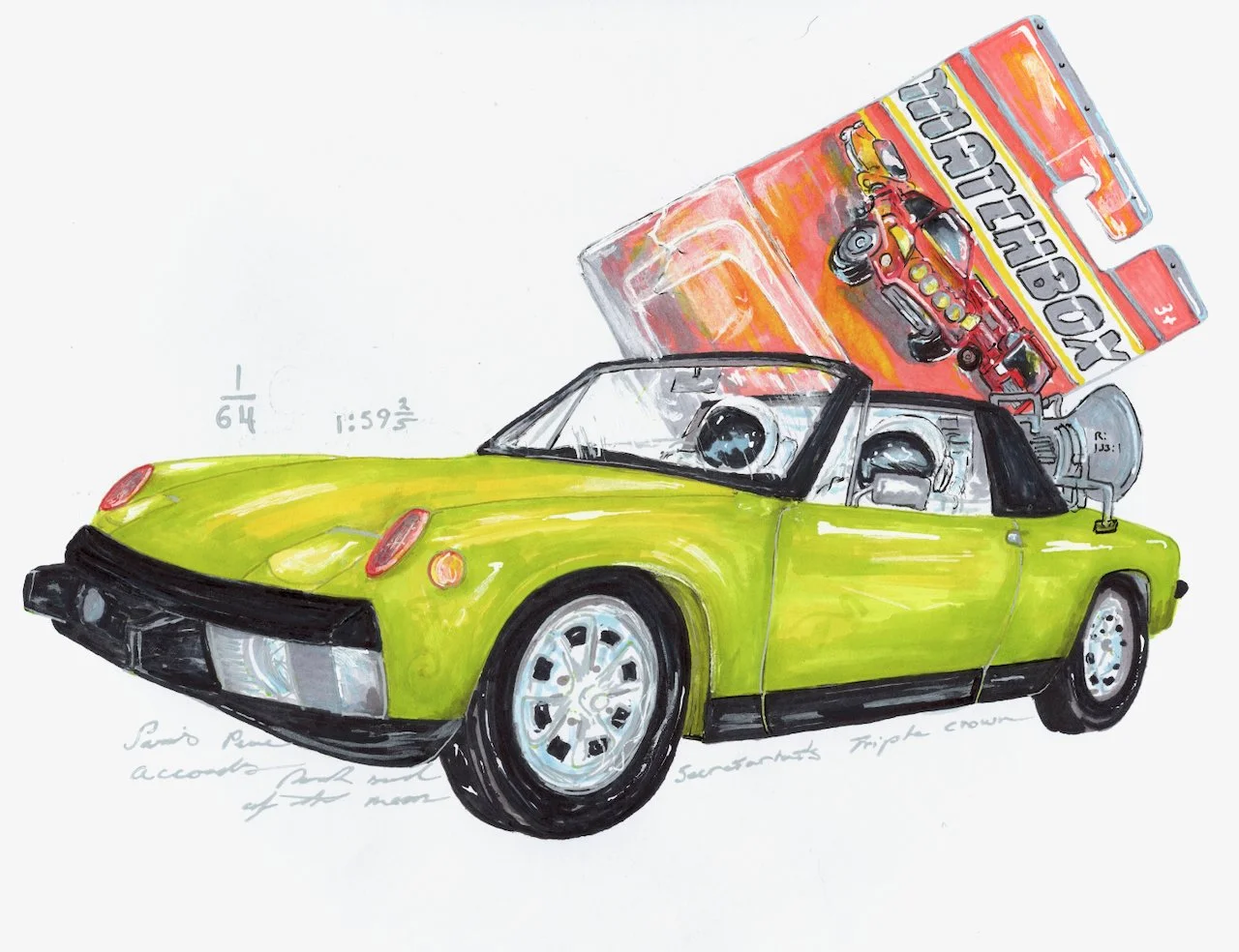
Jack Odell created a tiny road roller in 1952 for his daughter Anne, small enough to fit inside a matchbox. When her classmates saw it, they all wanted one. That simple moment sparked an idea, and Lesney Products soon launched the Matchbox line of miniature vehicles.
A young Patrick discovered Matchbox cars in the late 1970s and spent countless hours racing them through obstacle courses, loops, and yards of bright orange track. In my imagination, I was never just watching the cars. I was driving them. Every launch down the track felt like the start of a real adventure.
Fast forward to 2026, and Matchbox is still going strong, producing 100 million toy cars each year. Yet when I see them today on the shelf at the grocery store, something has changed. I no longer imagine myself behind the wheel.
Somewhere between childhood and adulthood, imagination often gets packed away. Creativity gets traded for schedules, responsibilities, and the practical demands of life. The sense of wonder that once came so naturally can slowly fade into the background.
This week, I decided to unlock that childlike imagination again and sketch a Matchbox-style adventure.
As I was drawing, I was reminded of a verse that points us back to something simple but profound: childlike faith.
Children trust easily. They imagine freely. They believe without overthinking. Jesus tells us that this posture of humility and trust is exactly what the kingdom of heaven requires.
Challenge: Pause for a moment today and remember what it felt like to imagine and believe like a child.
“At that time the disciples came to Jesus, saying, ‘Who is the greatest in the kingdom of heaven?’ And calling to him a child, he put him in the midst of them and said, ‘Truly, I say to you, unless you turn and become like children, you will never enter the kingdom of heaven. Whoever humbles himself like this child is the greatest in the kingdom of heaven.’” Matthew 18: 1-4 (ESV)
Space & Time
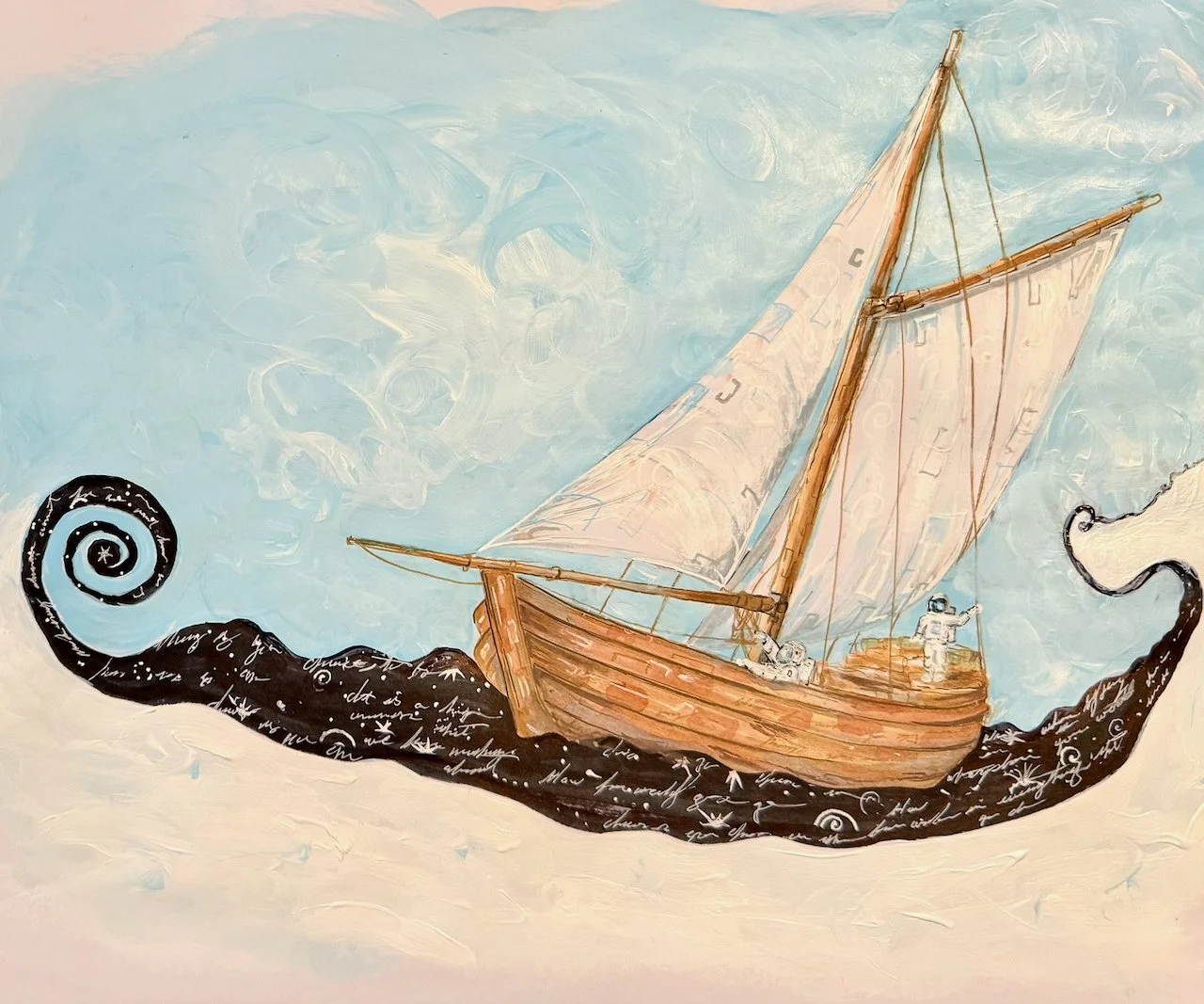
Newton: Objects curve because a force pulls them.
Einstein: Objects follow straight paths within a curved spacetime.
Both descriptions work, but Einstein’s is deeper and more accurate, especially at large scales, such as planets following curved orbits, light bending near stars, spacecraft trajectories deviating, and clocks in orbit running faster than clocks on Earth.
Like a ship sailing along the fabric of spacetime, the voyage would always feel straight in the moment. Yet over great distances, its course would slowly curve, not because it is being steered, but because it is following the natural geometry of spacetime shaped by nearby mass and energy.
Pause for a moment and consider: God exists outside of space and time. He sees the entire voyage laid out before Him, every horizon, every current, every bend and turn you will experience along this journey of life. His power is so great that, regardless of the direction in which we begin, He continually draws us back toward Himself. He has revealed Himself in the very fabric of space and time, displaying order, purpose, and masterful design.
“Your eyes saw my unformed substance; in your book were written, every one of them, the days that were formed for me, when as yet there was none of them.”
Psalm 139:16 ESV
Pneuma
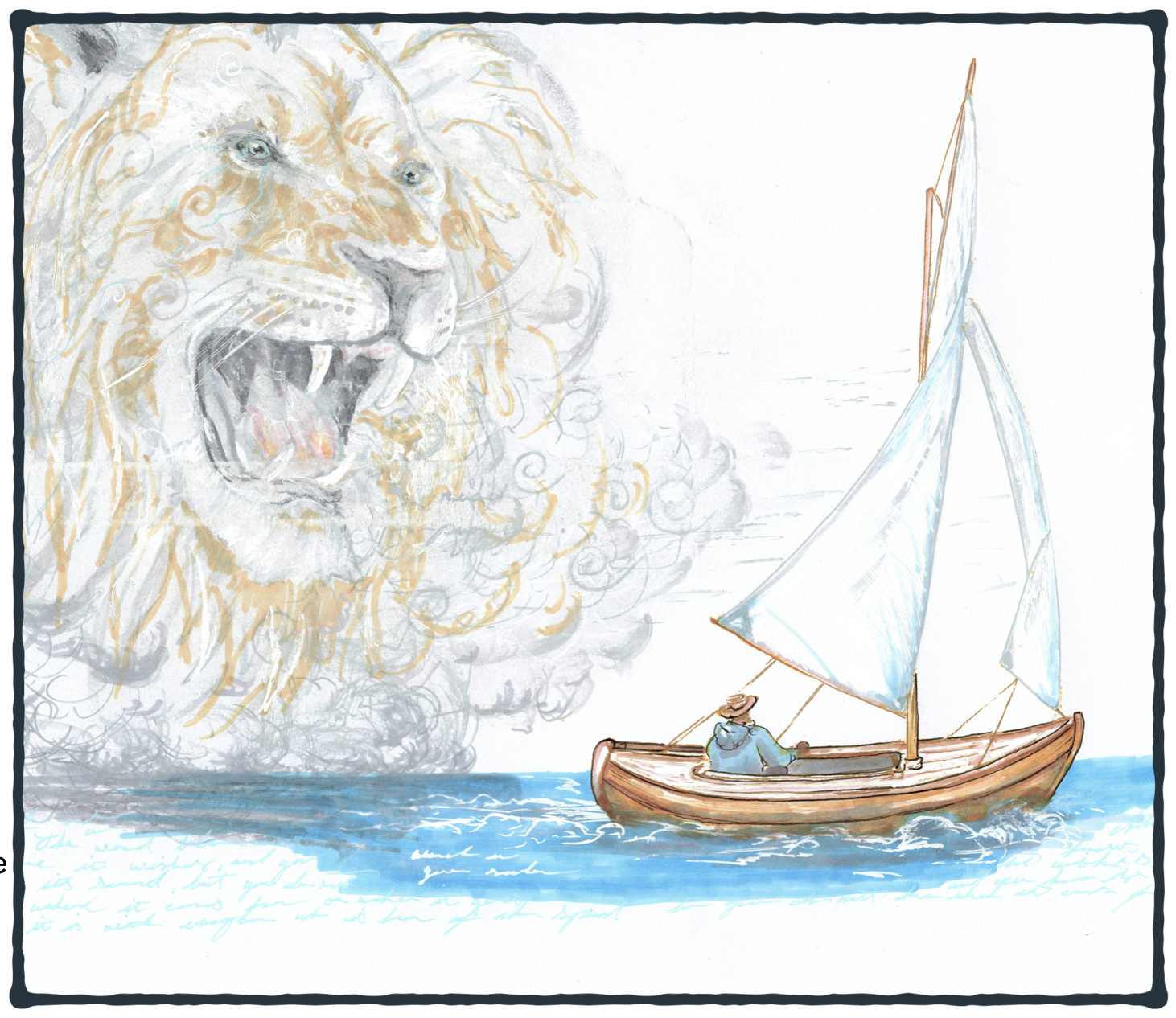
The Greek word “pneuma” can mean wind, breath, or spirit.
Jesus poetically explains,
“The wind blows where it wishes, and you hear its sound, but you do not know where it comes from or where it goes. So it is with everyone who is born of the Spirit.”
— John 3:8 (ESV)
Wind can only be observed by the things it interacts with: rustling leaves in a tree, blowing sand on a beach, or a sailboat skipping across the bay. Harnessing the wind is less about brute force and more about alignment. If you want to move forward, the direction of your sail often matters more than the strength of the wind.
This holds true in our walk with God. We cannot see the wind of His Spirit that breathes upon us, yet with proper alignment we are carried forward. Just as a sailor trusts the wind and weather he cannot command, I strive to trust the Spirit of God to guide me through all that this life brings. And when I get off course, I make corrections and tack back into His breeze.
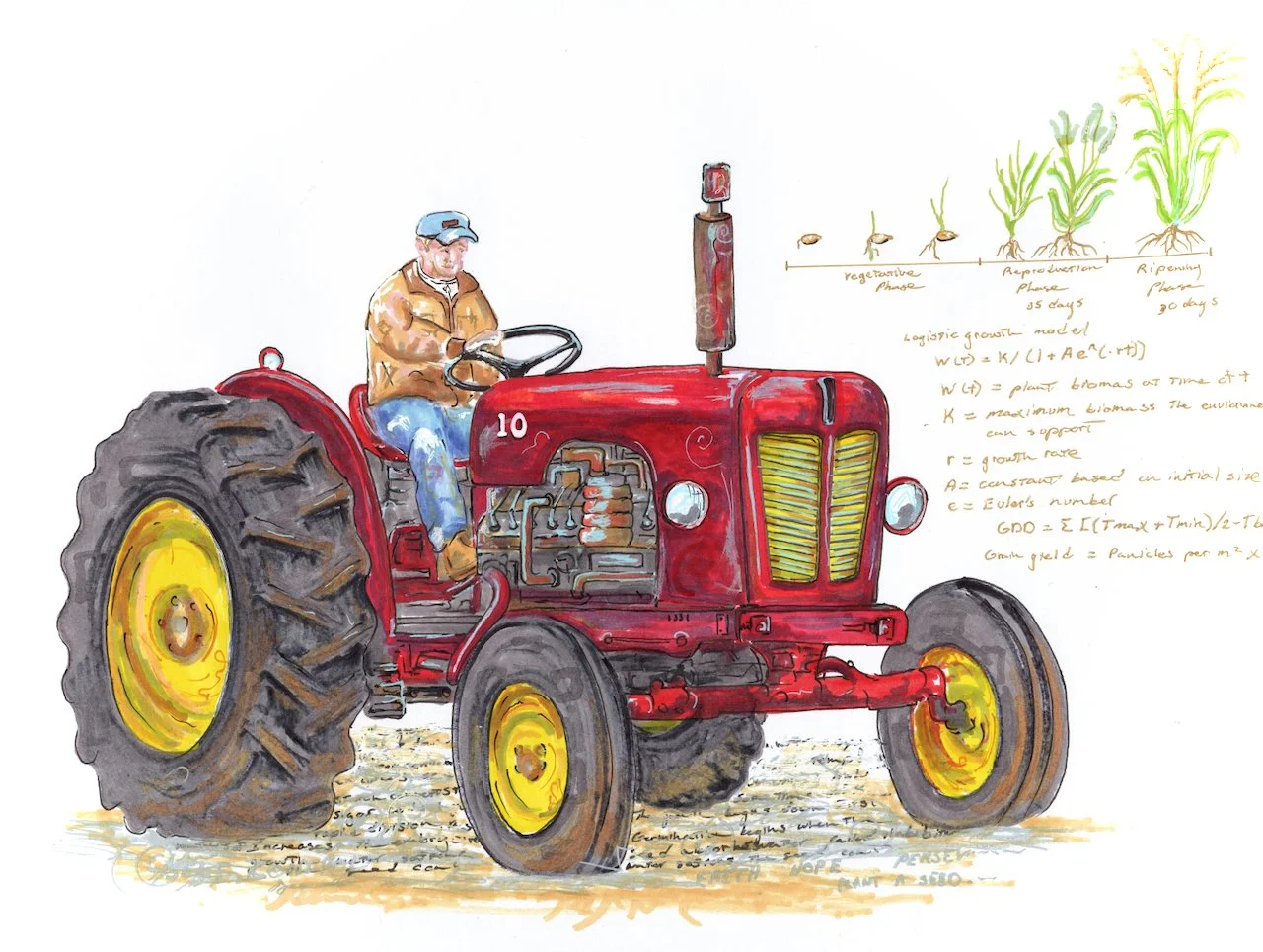
Germination begins quietly, unseen beneath the soil. A seed takes in water. The dry husk softens, and what once looked lifeless awakens. Inside, enzymes stir and begin their work, turning stored starch into sugar and setting metabolism back into motion. A hidden treasure hums to life.
Science can trace each step. It can chart the chemistry, map the DNA, and measure the heat units needed to bring a crop to maturity. It can explain dormancy in terms of hormones and environmental cues, and describe how certain seeds can rest for decades, even centuries, waiting for the right conditions.
But sitting here, I am aware that description is not the same as meaning.
Science tells me how the seed wakes. It does not tell me why life stirs at all. It can model hypotheses about how life may have begun, sketch pathways from chemistry to biology, and simulate ancient oceans under lightning-lit skies. Yet the deeper question lingers: why is there life instead of dust alone?
Through observation, science systematically describes how the universe behaves. It measures rainfall and sunlight, predicts yield, and calculates growth curves. But it does not weigh purpose. Meaning is not something you can load into an equation.
And maybe that is fitting.
Because true meaning, like the life tucked inside a seed, is not something we manufacture. It is a gift received, awakening awe and wonder deep within the soul. It is the realization that life is not a series of fortunate accidents, but intentional design.
“And he said, “The kingdom of God is as if a man should scatter seed on the ground. He sleeps and rises night and day, and the seed sprouts and grows; he knows not how. The earth produces by itself, first the blade, then the ear, then the full grain in the ear. But when the grain is ripe, at once he puts in the sickle, because the harvest has come.”
Mark 4:26-29 ESV
Seeds for Thought from a Tractor Seat
A Dream that Endures…
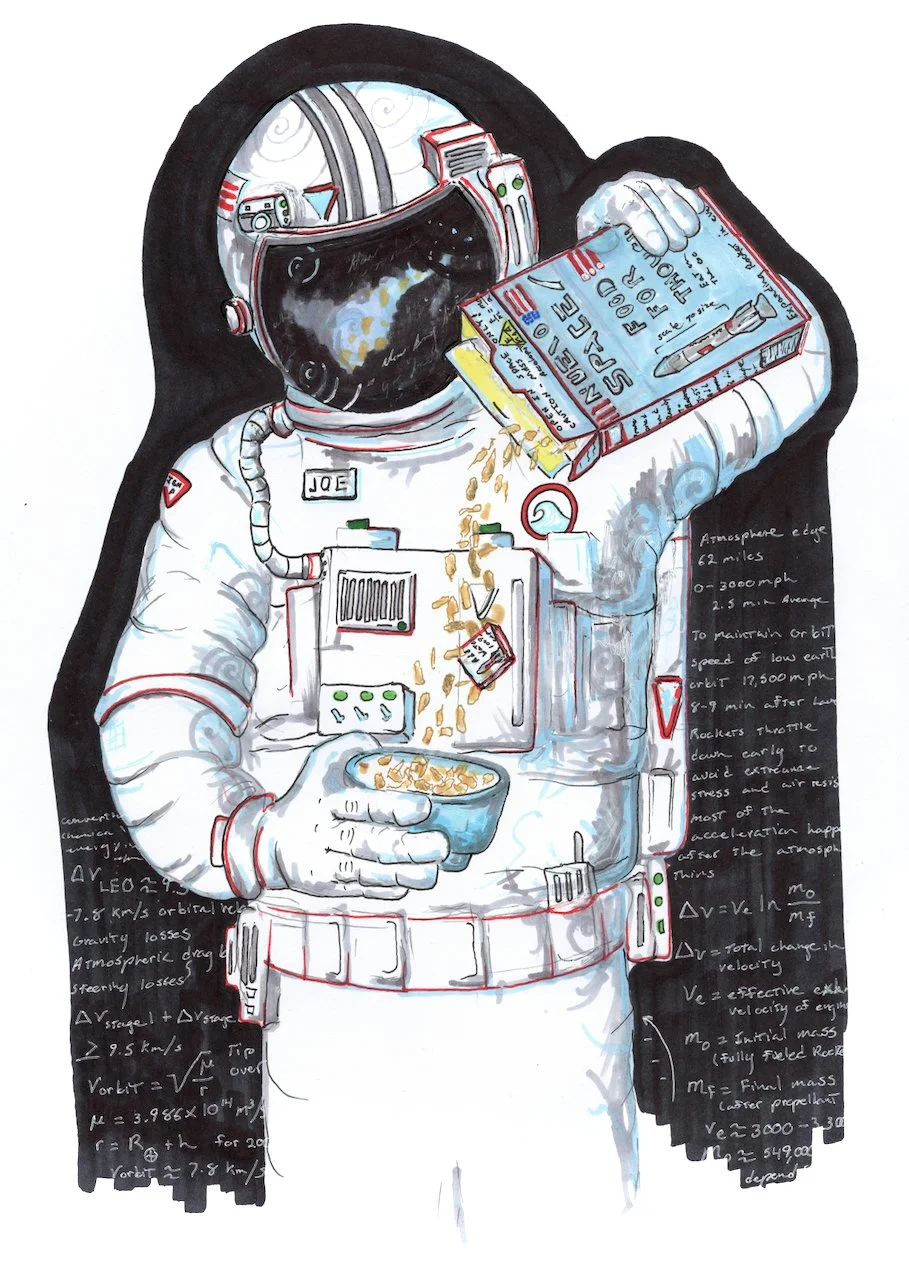
As a small child, my mind was easily swayed by the promise of a prize at the bottom of a cereal box. A plastic rocket could ignite my imagination, turning a simple toy into daydreams of becoming an astronaut.
As I sketched this drawing, I found myself thinking of a young Joseph. He too was a boy with a dream. But his dream would need to age, tested by time and hardship, for more than twenty years before it came to life. At seventeen, Joseph was sold into slavery by his jealous brothers. He rose to a place of trust in Potiphar’s house, only to be cast into prison for a crime he did not commit. Even there, God was at work, lifting him once again into a position of responsibility.
At thirty, Joseph was suddenly pulled from prison when Pharaoh’s cupbearer remembered the man who had once interpreted his dream. Brought before Pharaoh, Joseph trusted God for wisdom and explained pharaoh’s troubling dream. The seven fat cows and seven thin cows foretold seven years of abundance followed by seven years of famine. Pharaoh, recognizing God’s hand upon him, placed Joseph in charge of preparing the nation for what was to come.
Fast forward 8 years with storehouses full, the famine had spread across the land, and the very brothers who had betrayed Joseph stood unknowingly before him, desperate for help. The full account is found in Genesis 37–50.
In the end, Joseph saw clearly that God had used every twist of his story to position him exactly where he needed to be, not only to save his family, but countless others as well. My takeaway is simple. A dream without direction fades as quickly as the prize at the bottom of a cereal box. But a dream from God, paired with faith, ambition, patience, and hope, will endure —and has the power to change everything.
A Little While…
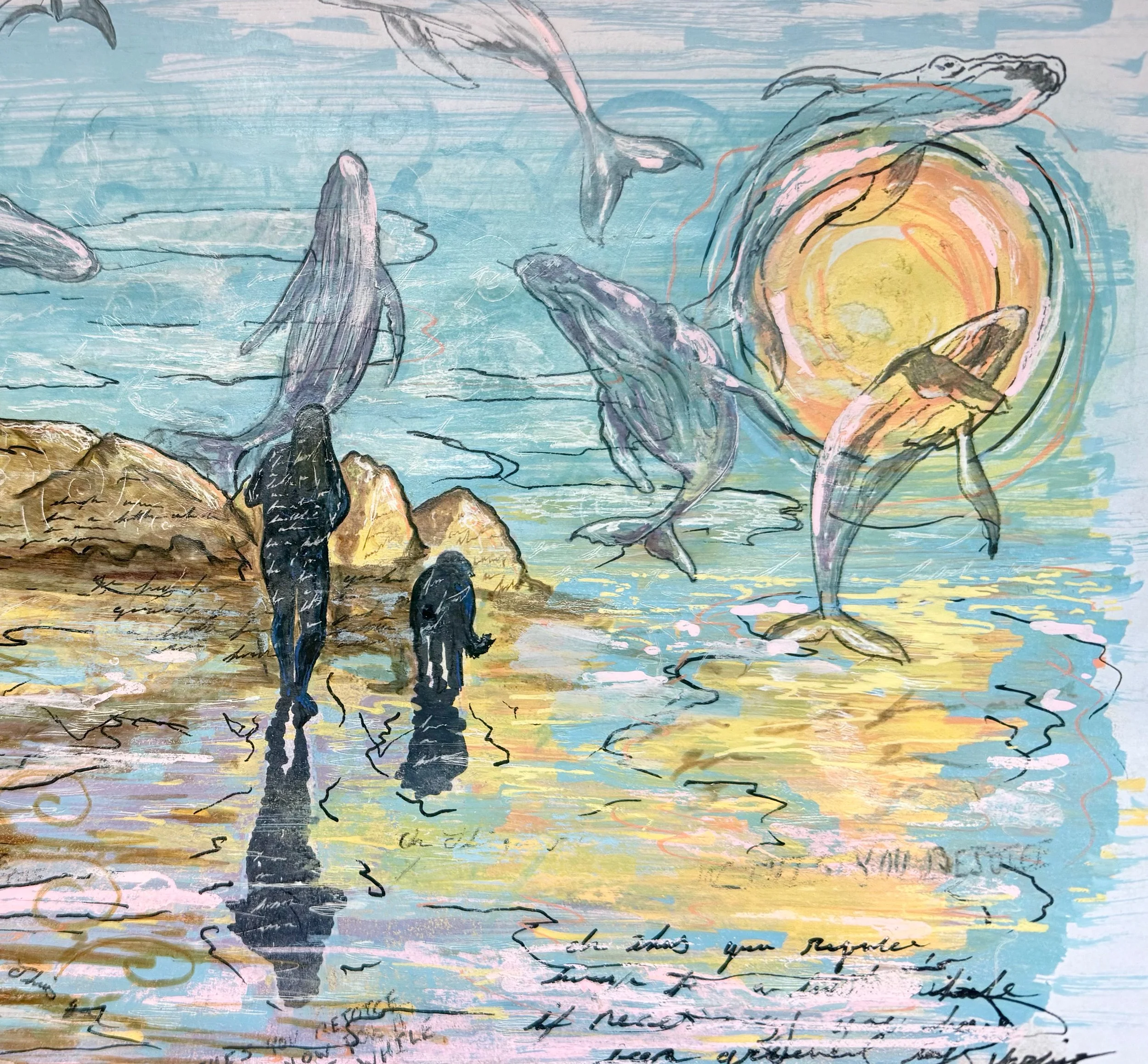
A typical winter day on the Oregon coast is cold and rain-soaked. This winter in the PNW has been anything but typical. That is how I found myself walking barefoot along the beach, trailing behind my wife and dog, carried off by the daydream of an unusually warm midwinter afternoon. In that quiet moment, it struck me that every day is a gift. Some simply arrive wrapped a little more beautifully than others.
Over the past few weeks, I have been spending time in the book of 1 Peter. I am drawn to the firsthand perspective and unfiltered honesty from which Peter writes. He speaks of heart-deep promises and hard-edged realities. He reminds us that life will hold both joy and suffering, peaks and valleys alike. Most of all, he presses home this truth: life is meant to be lived with purpose and intention, whether we stand on the mountaintop, walk through the valley, or find ourselves barefoot on the sand.
“In this you rejoice, though now for a little while, if necessary, you have been grieved by various trials, so that the tested genuineness of your faith—more precious than gold that perishes though it is tested by fire—may be found to result in praise and glory and honor at the revelation of Jesus Christ.”
1 Peter 1:6-7 ESV
Can Nothing Even Exist?
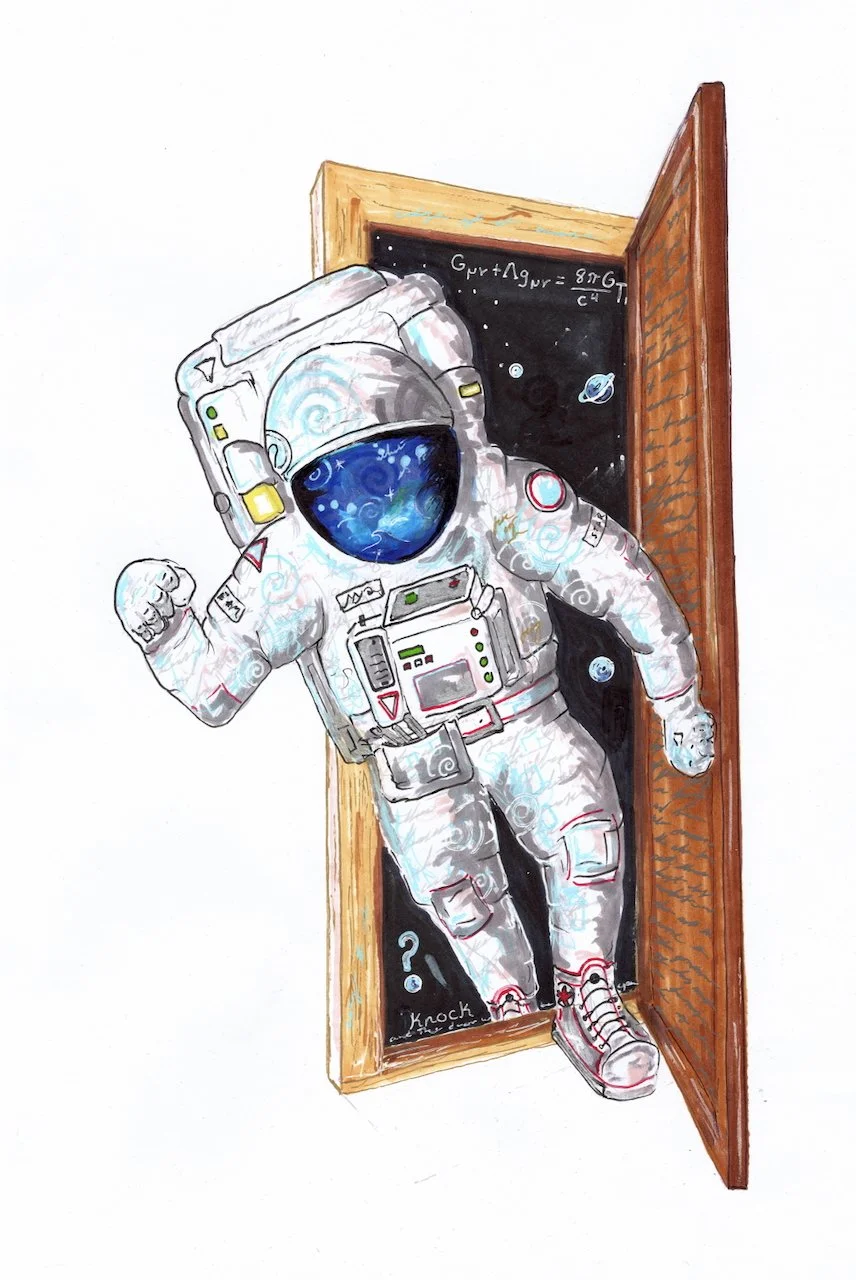
ZOOM OUT to the scale of the entire universe, galaxies, stars, planets, black holes, gas clouds, satellites, and debris, and the amount of matter that actually takes up space is astonishingly small. The universe is 99.9999999999999999999999999999% empty, sometimes containing as little as one atom per cubic meter. Empty… but not nothing.
It made me ask the question: Can “nothing” even exist?
If “nothing” means no space, no time, no energy, no laws, and no potential, then “nothing” could never produce anything. It couldn’t spark reactions, form stars, or even be, because “being” is itself a property. True “nothingness” is impossible.
Quantum physics shows that even the vacuum of space is something, full of energy, bending, rippling, and capable of hosting particles. And even if every atom disappeared, spacetime itself would remain. You can’t remove space without removing the entire universe.
All of this reminds me how limited our understanding truly is. Science reveals wonder through observation, but also points us to mysteries too deep for us to grasp. And those mysteries point to a God far beyond our understanding, One who not only shapes stars, but speaks the very fabric of creation into existence. He is the One whose heart drives the very pulse of the universe.
“He stretches out the north over the void
and hangs the earth on nothing.”
Job 26:7 (ESV)
“Behold, these are but the outskirts of his ways,
and how small a whisper do we hear of him!
But the thunder of his power who can understand?”
Job 26:14 (ESV)
What is tied to your bumper?
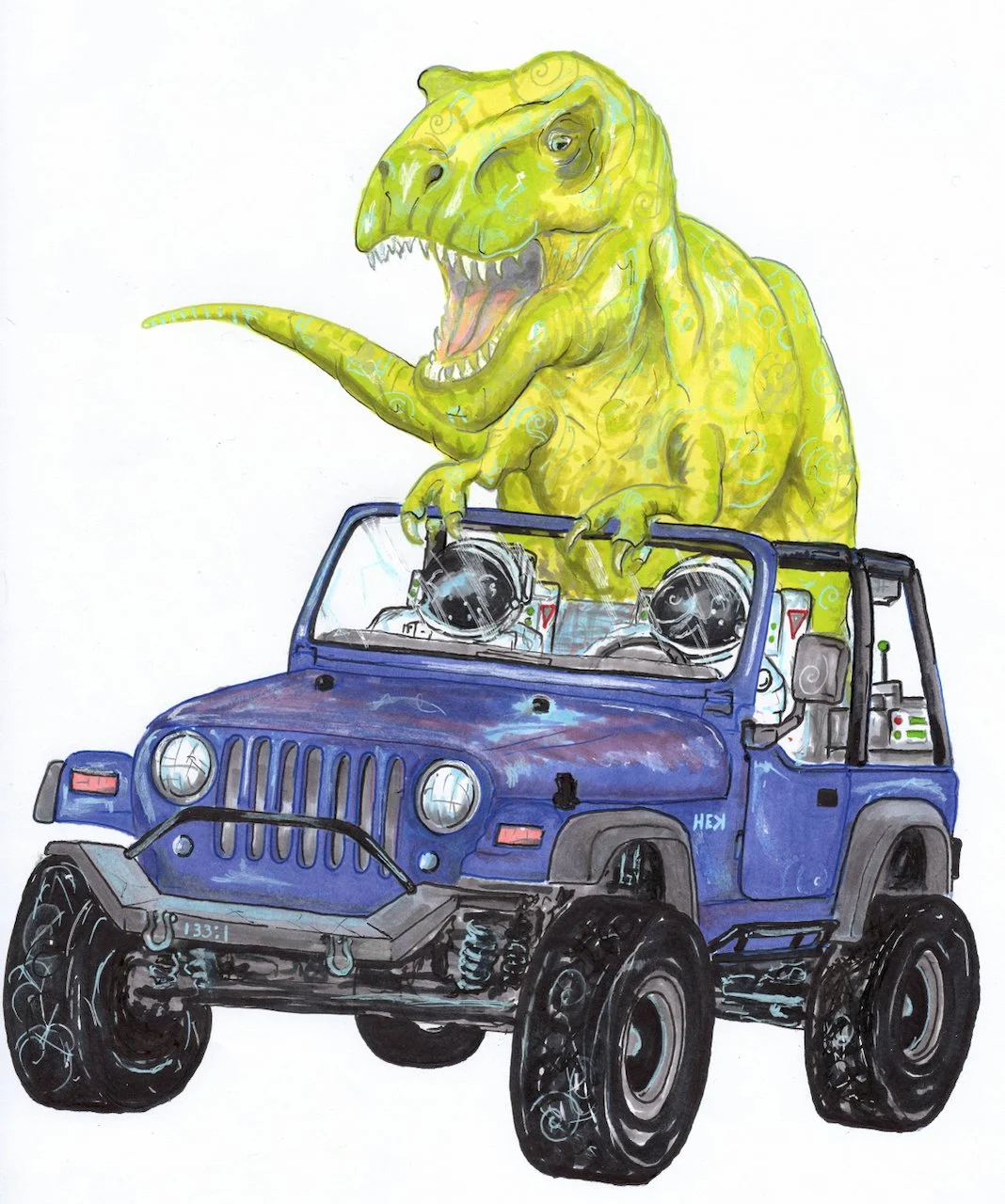
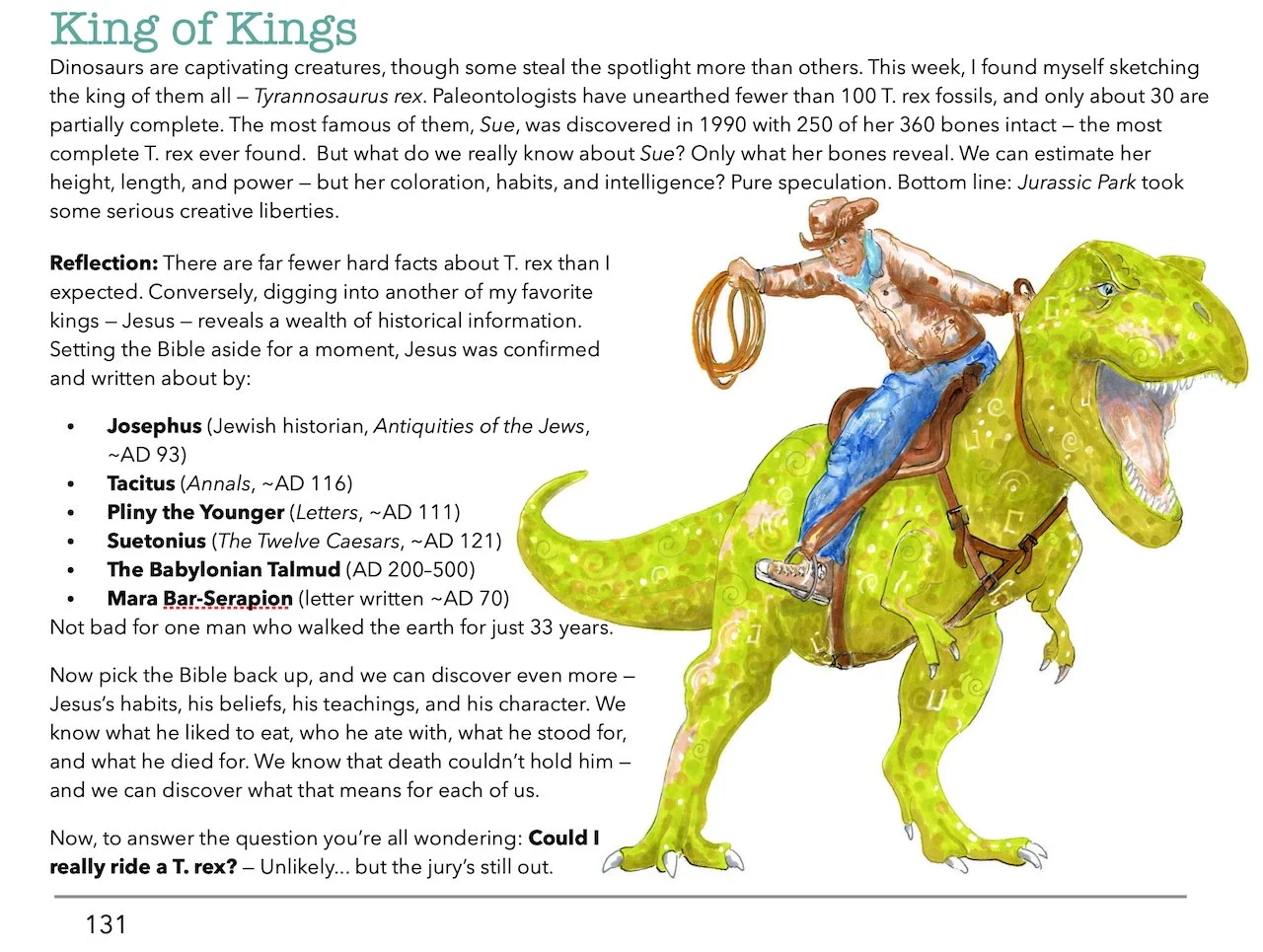
The image of an elephant in the room has long been used to describe something obvious that people deliberately ignore. Versions of this idea appear as early as an 1814 Russian fable penned by Ivan Krylov, and later writers, including Mark Twain, used similar imagery to expose willful blindness. Over time, “the elephant in the room” became a common phrase, now woven into everyday conversation, publications, and even sermon titles.
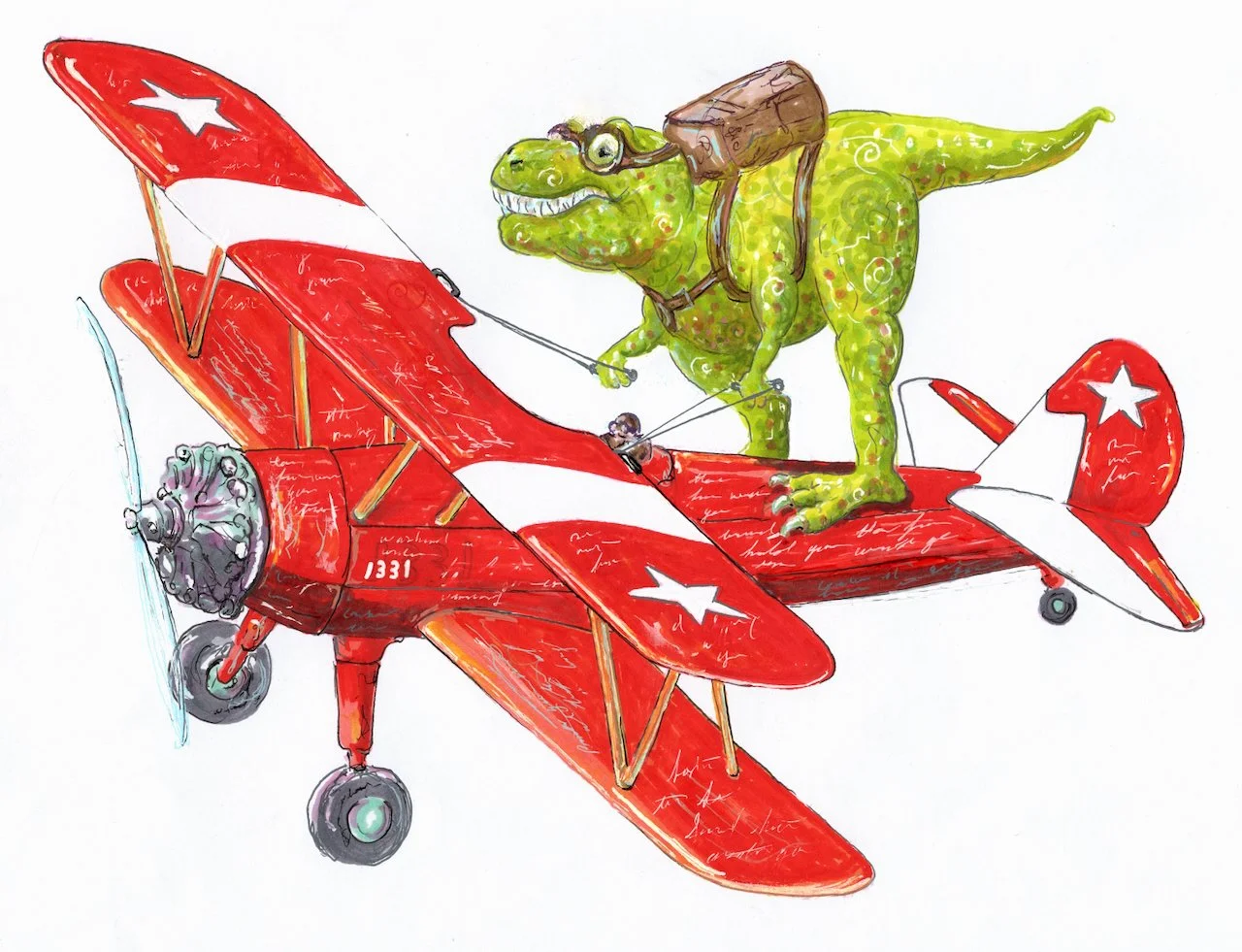
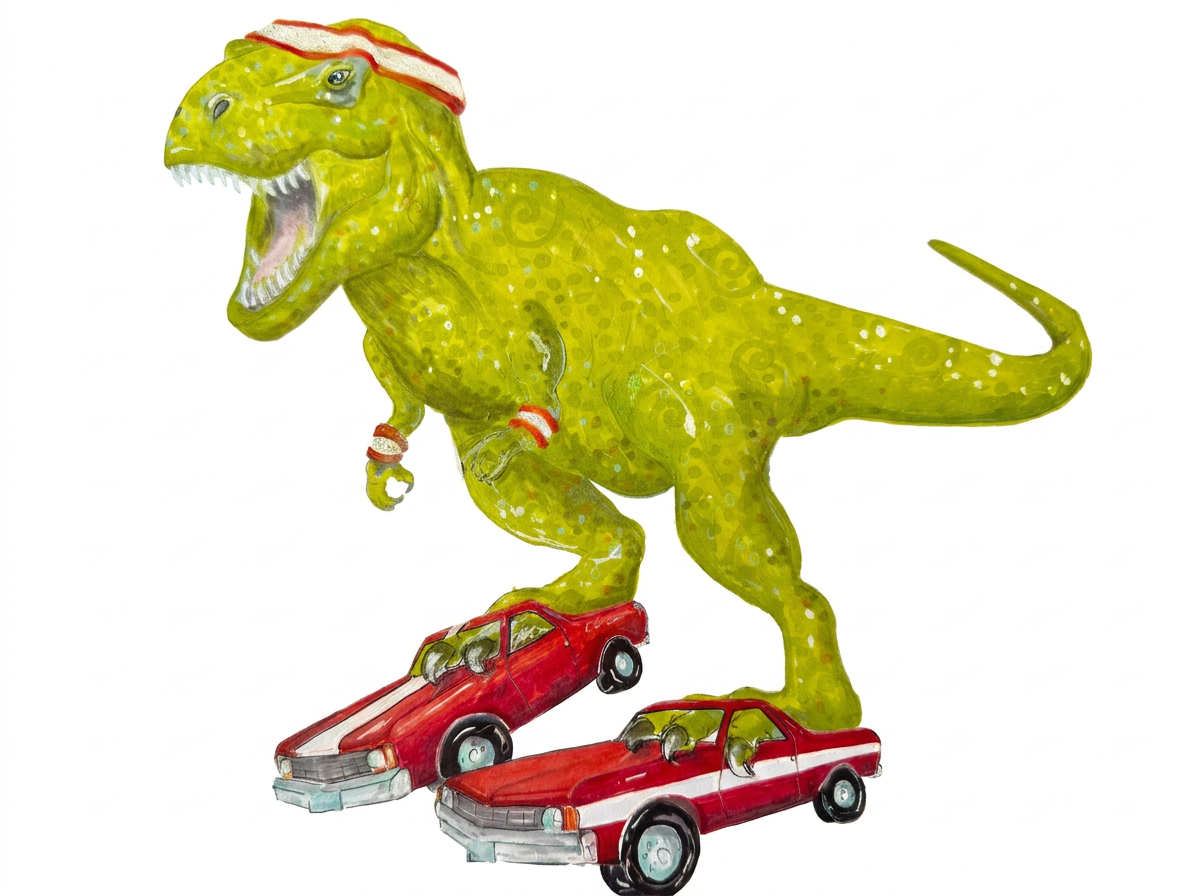
In a similar vein, I have sketched a T-Rex on the bumper, a heavy, intimidating burden that I carry wherever I go. Just like the elephant in the room, it is impossible to ignore, yet I often pretend it does not exist. How often do we carry such burdens, heavy and potentially dangerous, yet do everything we can to convince everyone that we have it all under control?
Today, I pause and reflect on the burdens I carry. I take note of the things I have tied to my bumper, and I acknowledge that I have hauled many of them around for far too long. As is my practice, I turn to Scripture and pray through the following verses, thanking God for His willingness to take on my burdens and carry me through another day.
Humble yourselves, therefore, under the mighty hand of God so that at the proper time He may exalt you,
casting all your anxieties on Him, because He cares for you.
1 Peter 5:6–7 (ESV)
“Come to Me, all who labor and are heavy laden, and I will give you rest.
Take My yoke upon you, and learn from Me, for I am gentle and lowly in heart, and you will find rest for your souls.
For My yoke is easy, and My burden is light.”
Matthew 11:28–30 (ESV)
In these verses, God invites us to lay down the T-Rex we have tied to our bumper. He invites us into His peace, a peace that surpasses all understanding. He invites us into rest so complete that we feel it in our very soul.
What are you made of?
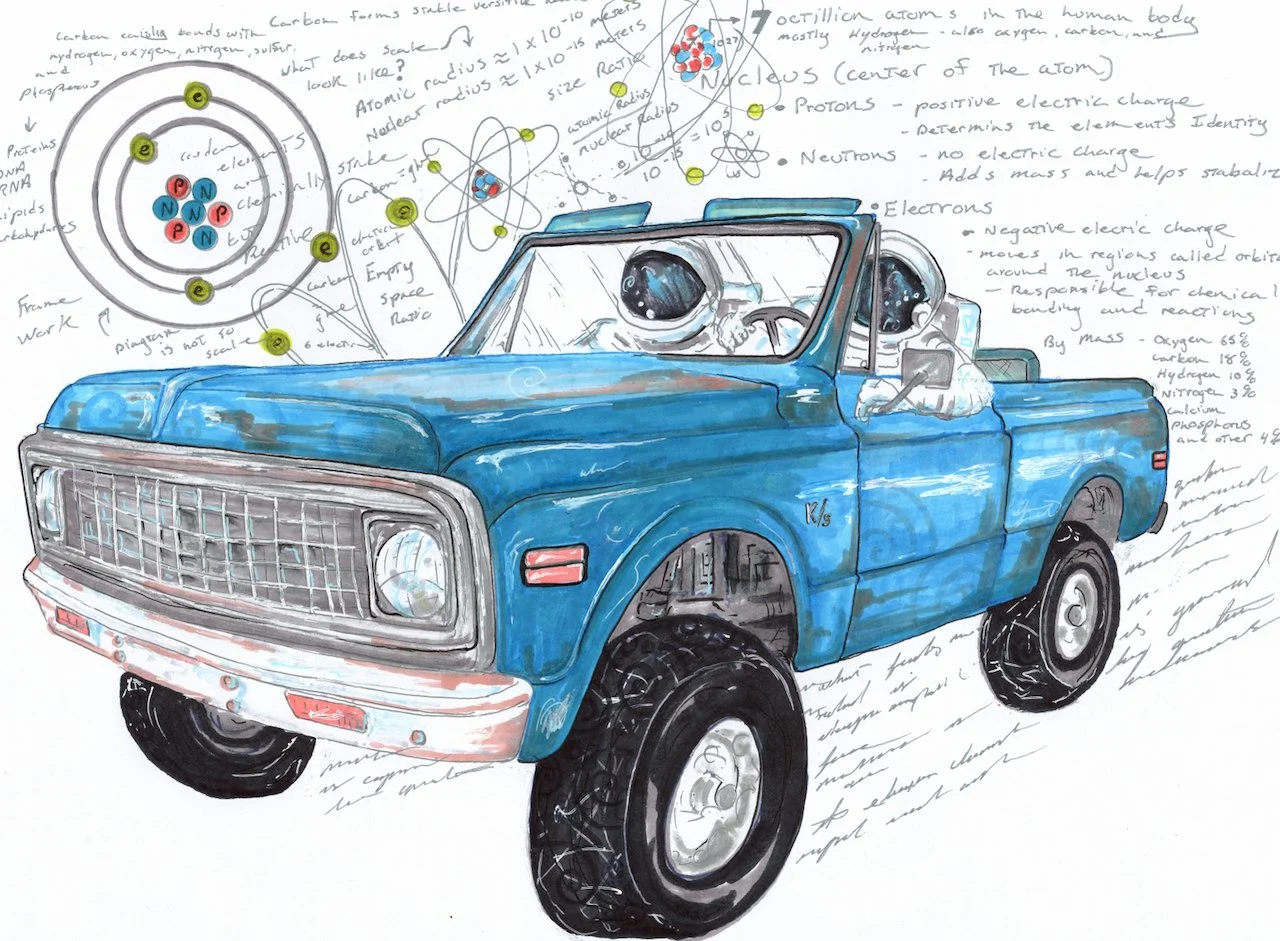
This week my imagination and Sharpie markers went down the atomic rabbit hole, asking a simple question: what are you made of? The human body is built from unimaginably small pieces, assembled with astonishing precision. The average human body contains roughly 7 octillion atoms. By mass, we are composed of about 65% oxygen, 18% carbon, 10% hydrogen, 3% nitrogen, with the remaining 4% made up of calcium, phosphorus, and other trace elements.
At the atomic level, we begin to see just how finely tuned our design truly is. Take carbon, the element that provides the backbone of biological life. With six protons, carbon has exactly four valence electrons, allowing it to form four stable covalent bonds. These bonds are strong enough to endure, yet flexible enough to rearrange into complex molecules. If carbon had three or five valence electrons, the chemistry required for life would not be possible. Atoms themselves exist in a delicate balance between collapse, where everything fuses or decays, and chaos, where nothing binds. Even the electromagnetic force must be precisely calibrated. If it were slightly stronger, electrons would bind too tightly and chemistry would fail. If it were slightly weaker, electrons would not remain bound at all.
Life is not an accident. The more I learn, the more I stand in awe of just how finely tuned creation truly is. One day I will meet my Maker, and I suspect that when that day comes, my awe and wonder will increase beyond measure.
“For by him all things were created, in heaven and on earth, visible and invisible, whether thrones or dominions or rulers or authorities. All things were created through him and for him. And he is before all things, and in him all things hold together.”
Colossians 1:16–17 (ESV)
What are you chasing
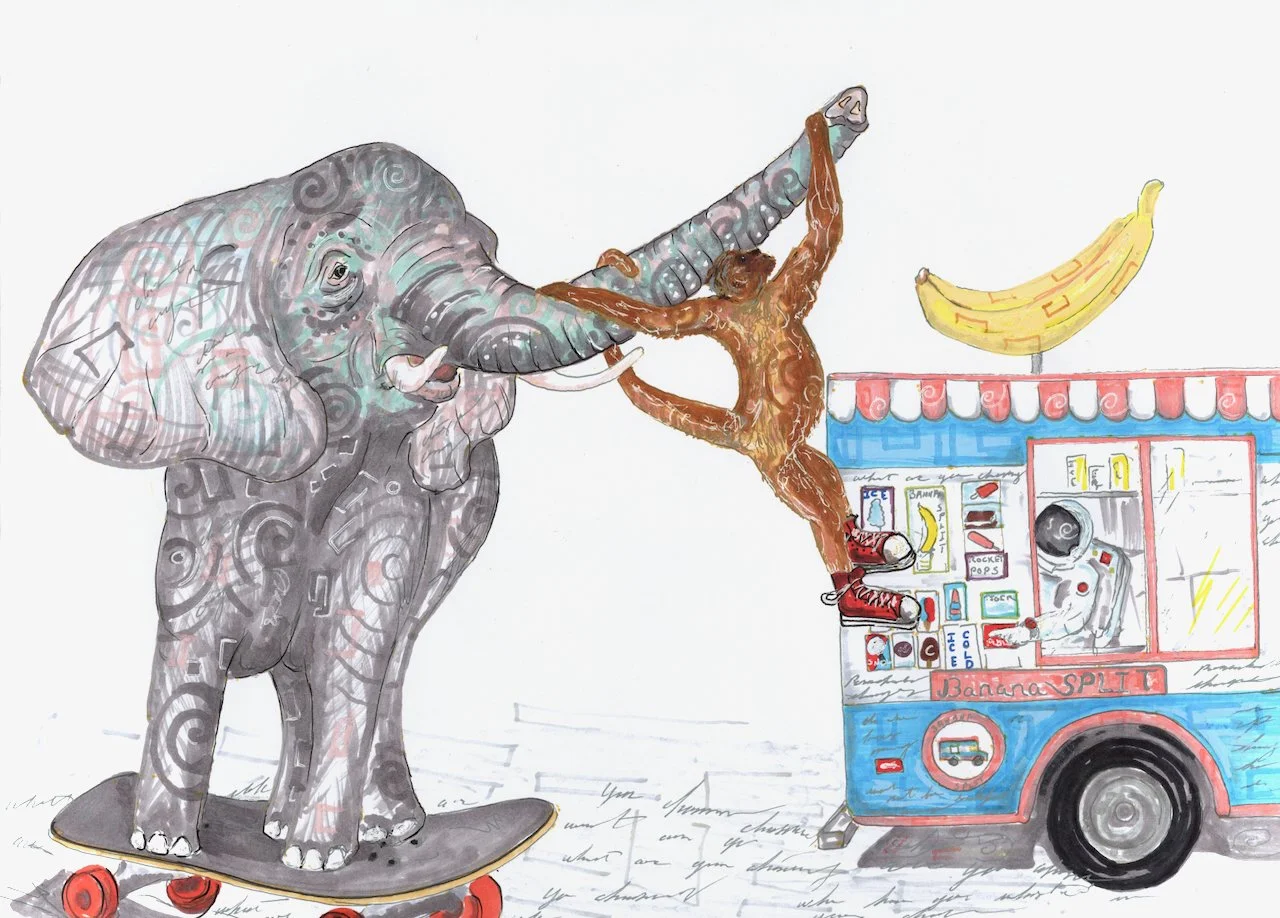
What are you chasing?
I found myself this week asking the question, What are you chasing? It emerged from a conversation with my wife and lingered in my heart. Our brains naturally measure experiences against whatever we value most. What receives our attention becomes the lens through which everything else is evaluated.
Over the years, I have chased many things, enlisted others in the pursuit, climbed and descended many ladders, and even caught a few, only to discover they did not satisfy.
Ecclesiastes 5:10 (ESV)
“He who loves money will not be satisfied with money, nor he who loves wealth with his income; this also is vanity.”
My prayer today is that my focus would center on the things that do not perish, the things that cannot be lost, and the things that cannot be bought, sold, or traded. I pray that I would train my eyes and focus on the things that are above.
Colossians 3:1–2 (ESV)
If then you have been raised with Christ, seek the things that are above, where Christ is, seated at the right hand of God.
Set your minds on things that are above, not on things that are on earth.
Listening to Learn
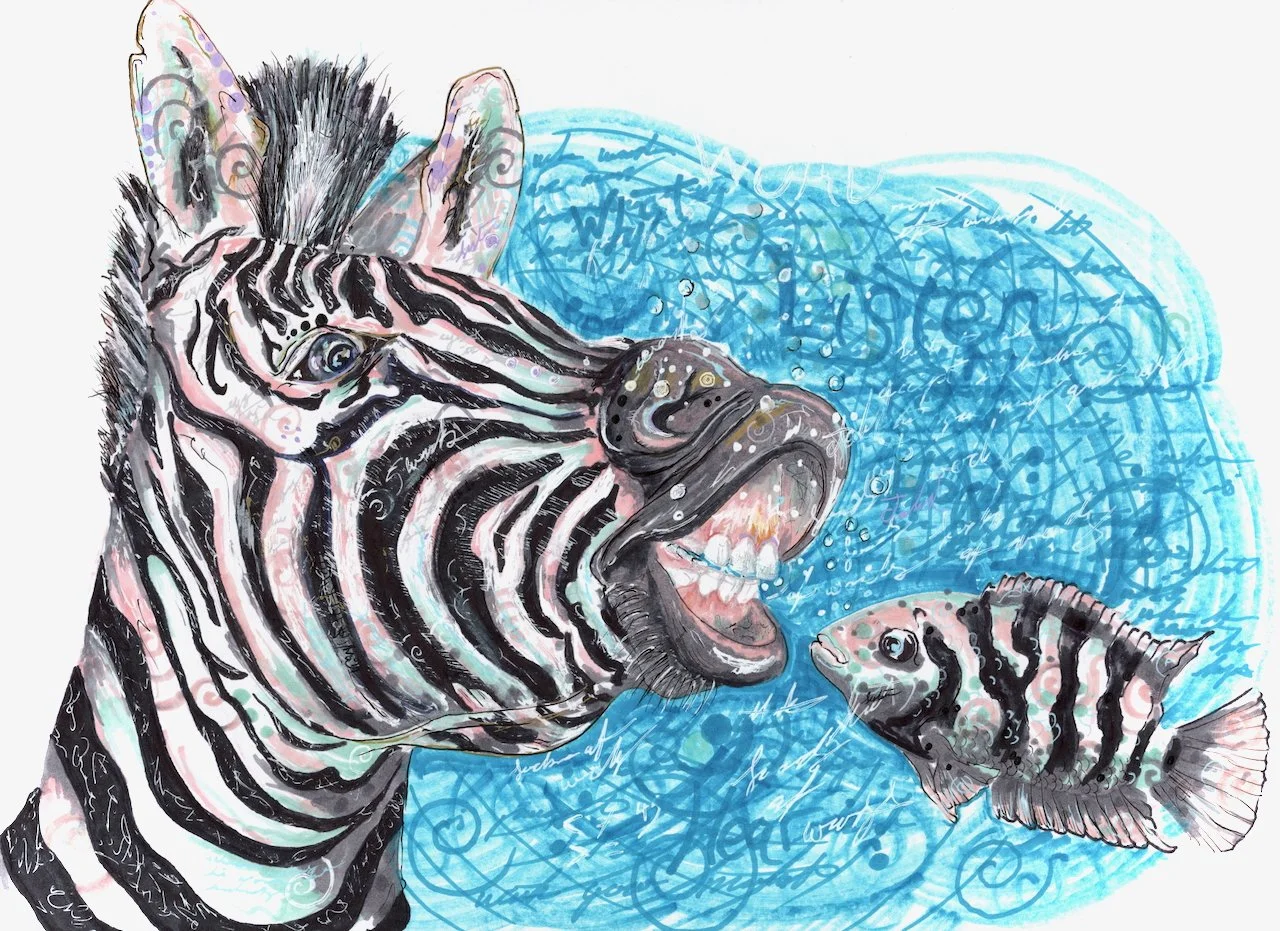
Listening to Learn:
I was reminded this week of the importance of listening while working through a few things with my family. Intentional listening is a muscle that requires regular exercise and, in my case, constant attention in order to be effective.
Let’s just say my usual knee-jerk reaction to trouble or conflict is to take on the role of a fixer—i.e., “Let me tell you how we’re going to solve this issue in five bullet points or less.” That typically works about as well as a zebra attempting to give directions to a fish!
This week, I intentionally paused, took time to pray, listened to God, and then listened to my family. I asked questions and found myself learning, understanding, and eventually reaching common ground. Who says you can’t teach an old zebra new tricks?
Listening—truly listening—creates space for understanding and healing. It reminds us that wisdom begins not with words, but with humility and patience.
James 1:19 (ESV) “Let every person be quick to hear, slow to speak, slow to anger.”
Proverbs 18:13 (ESV) “If one gives an answer before he hears, it is folly and shame.”s
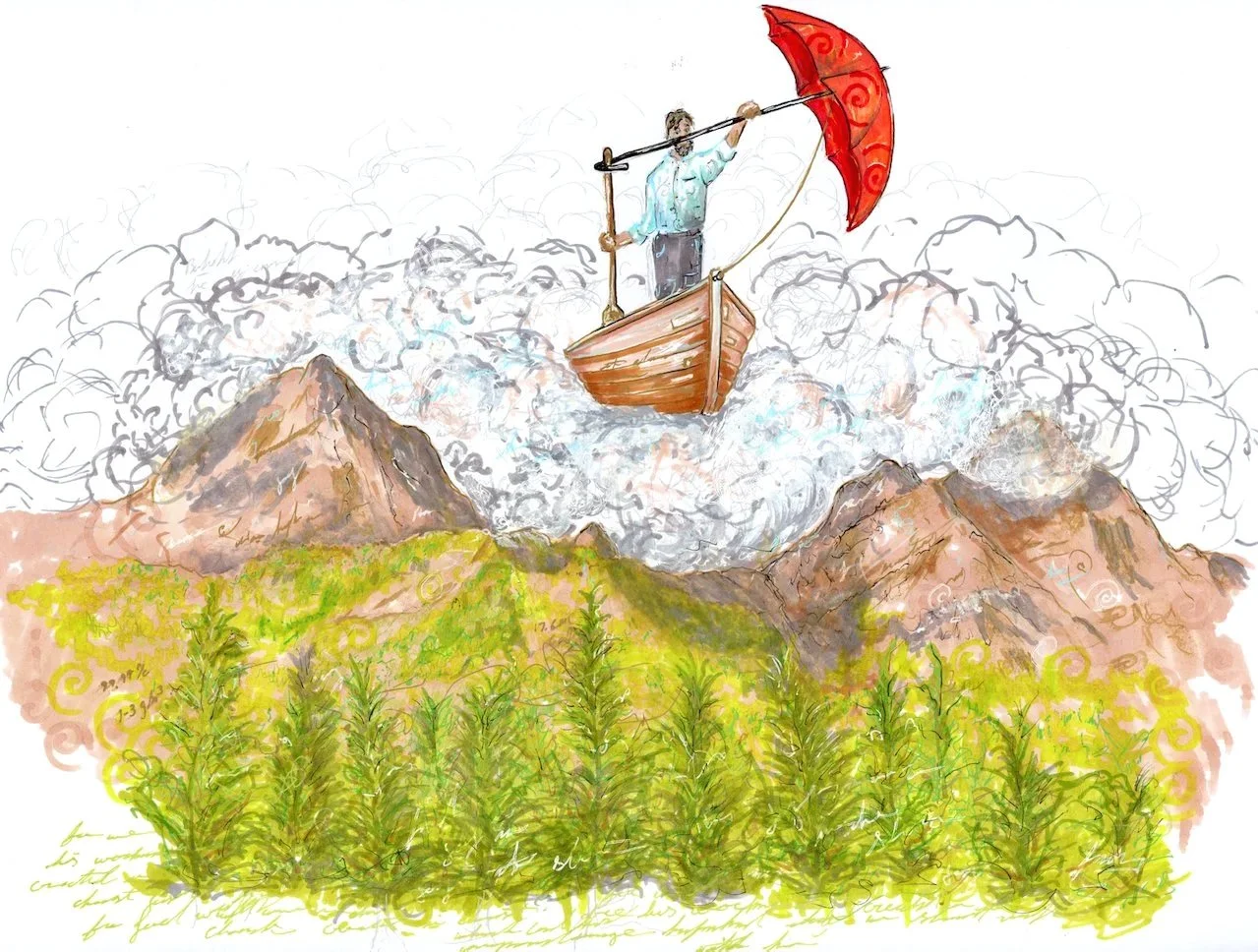
In every life a little rain must fall (B. G. De Sylva, 1921)
The Pacific Northwest has been under an atmospheric river alert for weeks. My imagination pictures clouds so heavy with water I could sail across them. Yet even the thickest clouds are still 99.9% air, quietly carrying what they will one day release.
Clouds gather water slowly and let it go only when droplets grow too heavy to remain suspended. Atmospheric rivers can drop inches of rain. One inch equals 17.4 million gallons per square mile. Trillions of gallons have fallen one small drop at a time, covering the PNW in a steady, patient release.
Rain requires waiting. It does not fall where or how we would choose.
Ecclesiastes 11:3 (ESV)
“If the clouds are full of rain, they empty themselves on the earth,
and if a tree falls to the south or to the north,
in the place where the tree falls, there it will lie.”
Waiting on God’s timing invites us to trust not only when something happens, but how it happens. We may pray for breakthrough in one place, yet it arrives in another. Faith rests in the belief that God’s timing and ways are better than our own.
In life, a little rain, and a little discomfort, will fall. Yet it is the rain that draws flowers from the ground, and it is often the struggle that stretches us and allows us to grow.
Tale of Two Pumps

If you have spent much time in an old truck, you have probably had a run-in with a failing fuel pump. It does not matter how strong the engine is; you are not going anywhere without a working pump. Most old-truck pumps last around 100,000 miles. At ten miles per gallon, that is about 10,000 gallons of fuel pushed through before it finally gives out.
That simple thought sent me down a math trail about my own internal fuel pump. With an active childhood and decades of running, swimming, and biking, my heart has pumped and circulated about 2,100 gallons of blood every single day. Over 52 years that adds up to roughly 40 million gallons, enough to fill 111 Olympic-sized swimming pools.
When I sit with that, I am reminded how easy it is to overlook the quiet miracles God built into our bodies. The heart is one of His masterpieces, faithfully pulsing moment after moment, beating 24 hours a day, seven days a week.
Today I pause with my hand on my chest, feeling that steady rhythm. And I thank God for His unmatched craftsmanship, for this hidden gem of a pump that keeps my lifeblood flowing.
Deuteronomy 29:29 (ESV)
“The secret things belong to the Lord our God, but the things that are revealed belong to us and to our children forever, that we may do all the words of this law.”